Project name: Bright Future for Black Vulture in Bulgaria LIFE14 NAT/BG/000649
Project website: https://greenbalkans.org/VulturesBack/en/
Coordinating beneficiary: Green Balkans – Stara Zagora NGO
Associated beneficiaries: Fund for Wild Flora and Fauna (FWFF) from Bulgaria, Vulture Conservation Foundation from Netherlands (VCF), Junta de Extremadura from Spain and Euronatur from Germany
Total eligible budget: 3,483,411 EUR, with 75% EU financial contribution of 2,607,648 EUR.
Project duration: 7 years (July 2015-2022)
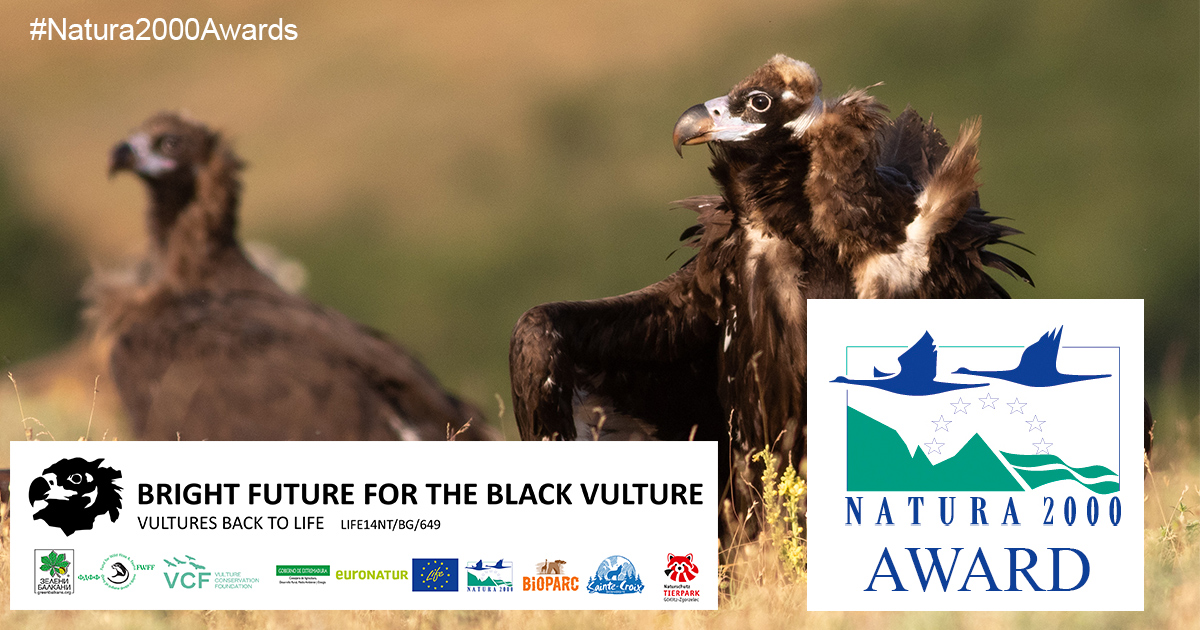
The project facilitated the Black Vulture return to Bulgaria through back-stopping European expertise – the release of birds to re-establish the local population, improving the conditions, limiting threats and elaborating national capacities to ensure the persistence and long-term survival.
The ultimate aim of the project is to establish a nesting population of Black Vulture in Bulgaria, in order to restock the regional population and restore the connections between the sub-populations of the species in the Balkans (Greece) and Crimea with those in the Alps and the Iberian Peninsula to the west and the Middle East to the southeast, facilitating the re-creation of a much more sustainable Pan-European population.
NATURA 2000 sites in Bulgaria:
- Kotlenska planina (SPA BG0002029 & SCI BG0000117)
- Sinite kamani – Grebenets (SPA BG0002058 & SCI BG0000164)
- Vrachanski Balkan (SPA BG0002053 & SCI BG0000166)
- Kresna (BG0002003 SPA & Kresna – Ilindentsi SCI BG0000366)
- Provadiysko – Royaksko plato (SPA BG0002038 & SCI BG0000104)
- Sakar (SPA BG0002021 & SCI BG0000212)
- Tsentralen Balkan (SPA & SCI BG0000494)
- Yazovir Ivaylovgrad (SPA BG0002106)
- Byala reka (SPA BG0002019)
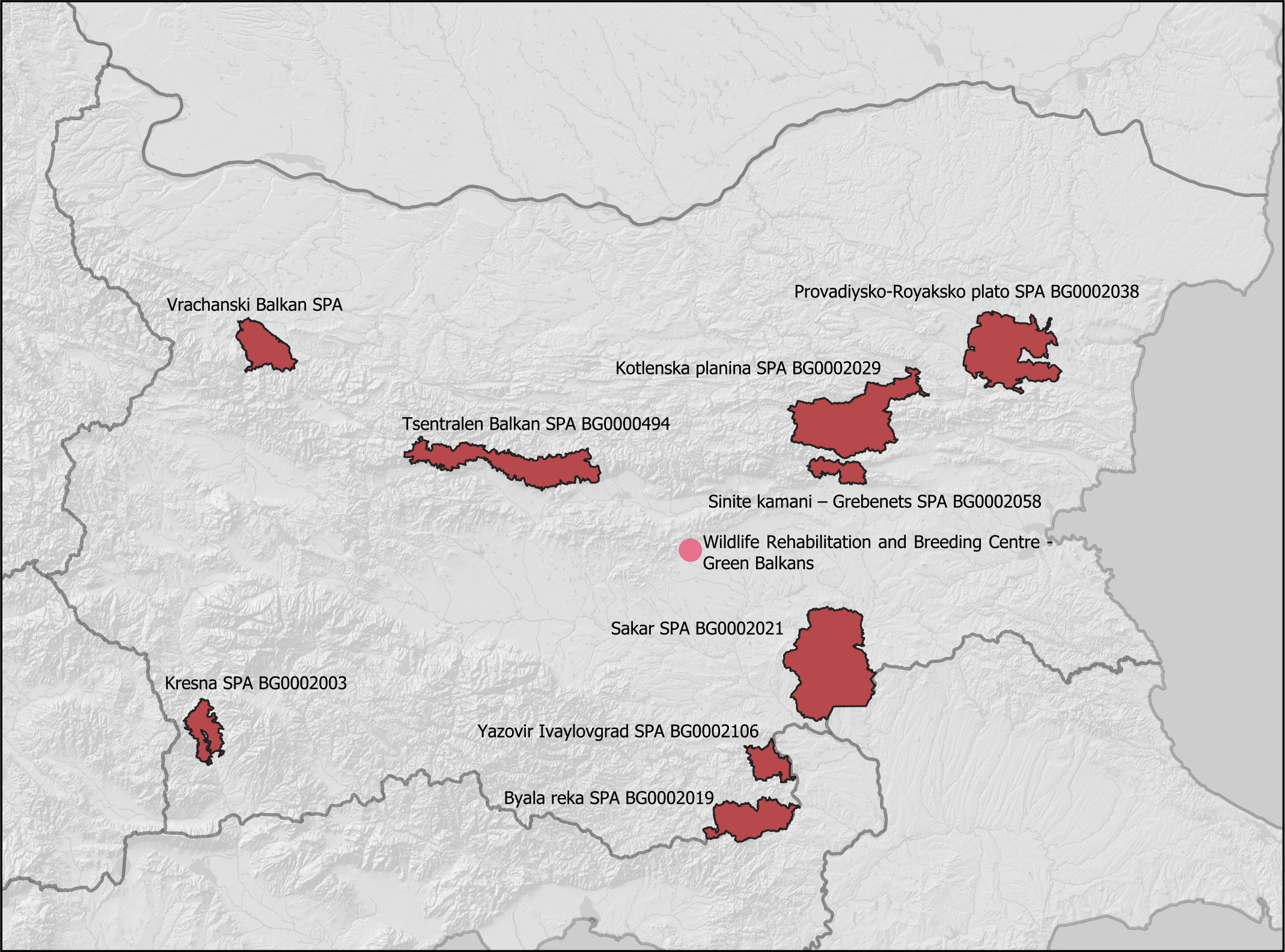
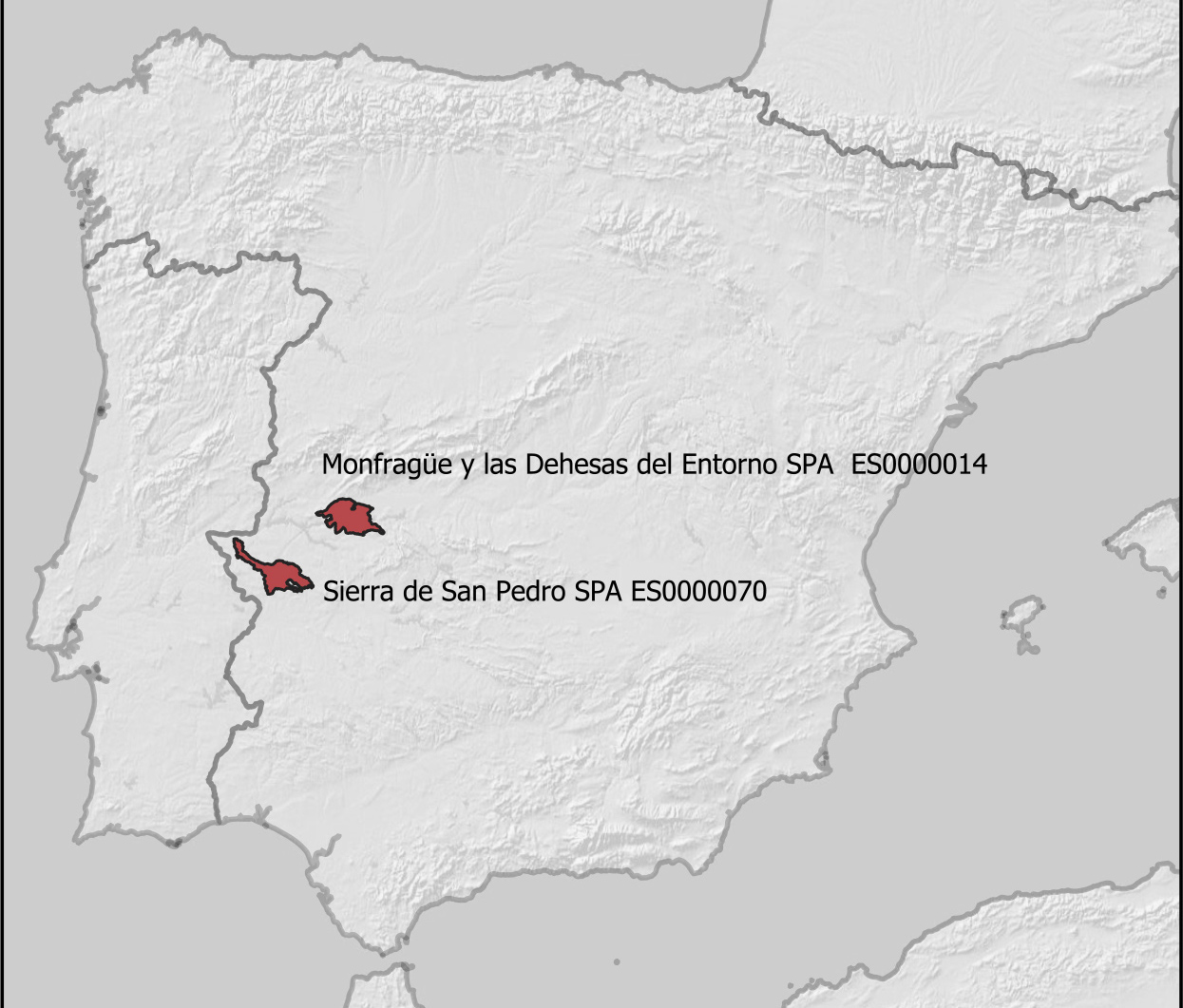
as well as in Spain:
- Sierra de San Pedro (SPA ES0000070)
- Monfragüe y las Dehesas del Entorno (SPA ES0000014 & Monfragüe SCI ES4320077).
Recovery and Conservation of Vultures on the Balkan Peninsula and Adjacent Regions (BVAP) was initiated. It provides for a step-by-step recovery of the species, starting with Griffons and finishing with Bearded Vultures. A project “Recovery of the Populations of Large European Vultures in Bulgaria” LIFE08 NAT/ BG/278 was therefore triggered in 2010. The project was carried out by Green Balkans in partnership with the Fund for Wild Flora and Fauna (FWFF) and the Birds of Prey Protection Society (BPPS). It has led to the successful restoration of the Griffon Vulture as a nesting species in the Balkan Mountains of Bulgaria after the species has been considered extinct for over 70 years.
Inspired and motivated by this success, the team has developed the current continuation project with the first practical steps towards the reintroduction of the Black Vulture (also known as the Eurasian Black Vulture), also considered extinct as a nesting species in Bulgaria since the 1970s with accidental last recorded breeding in the country in 1992.
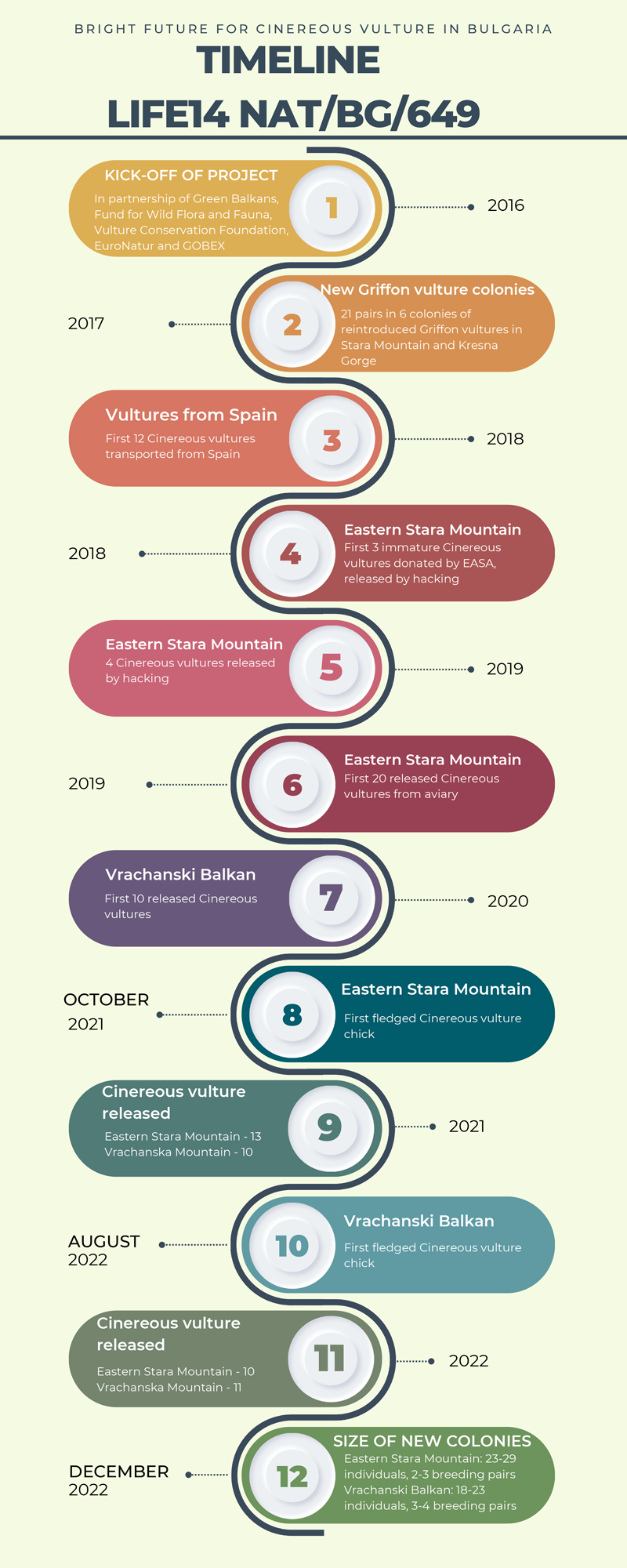
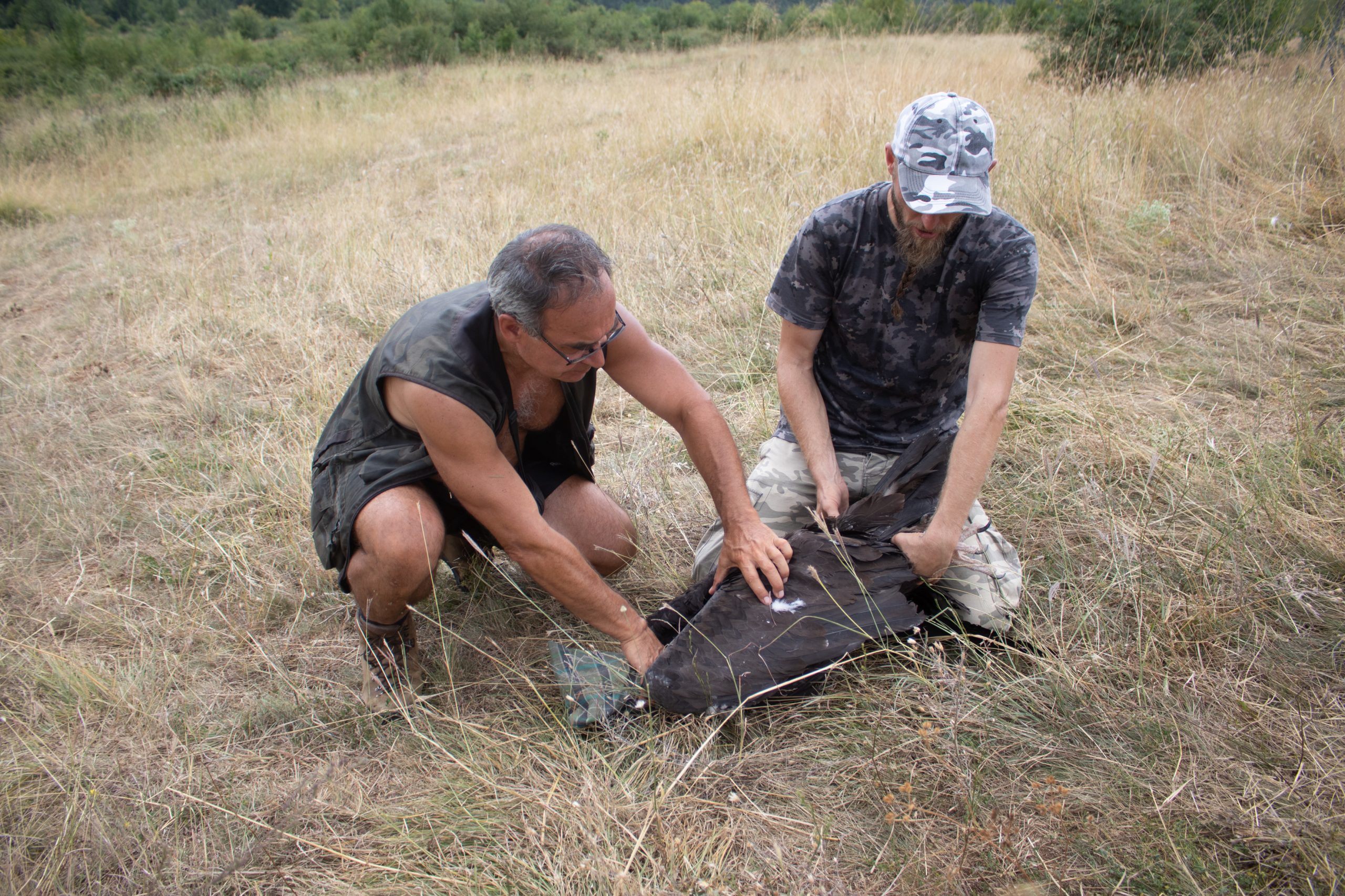
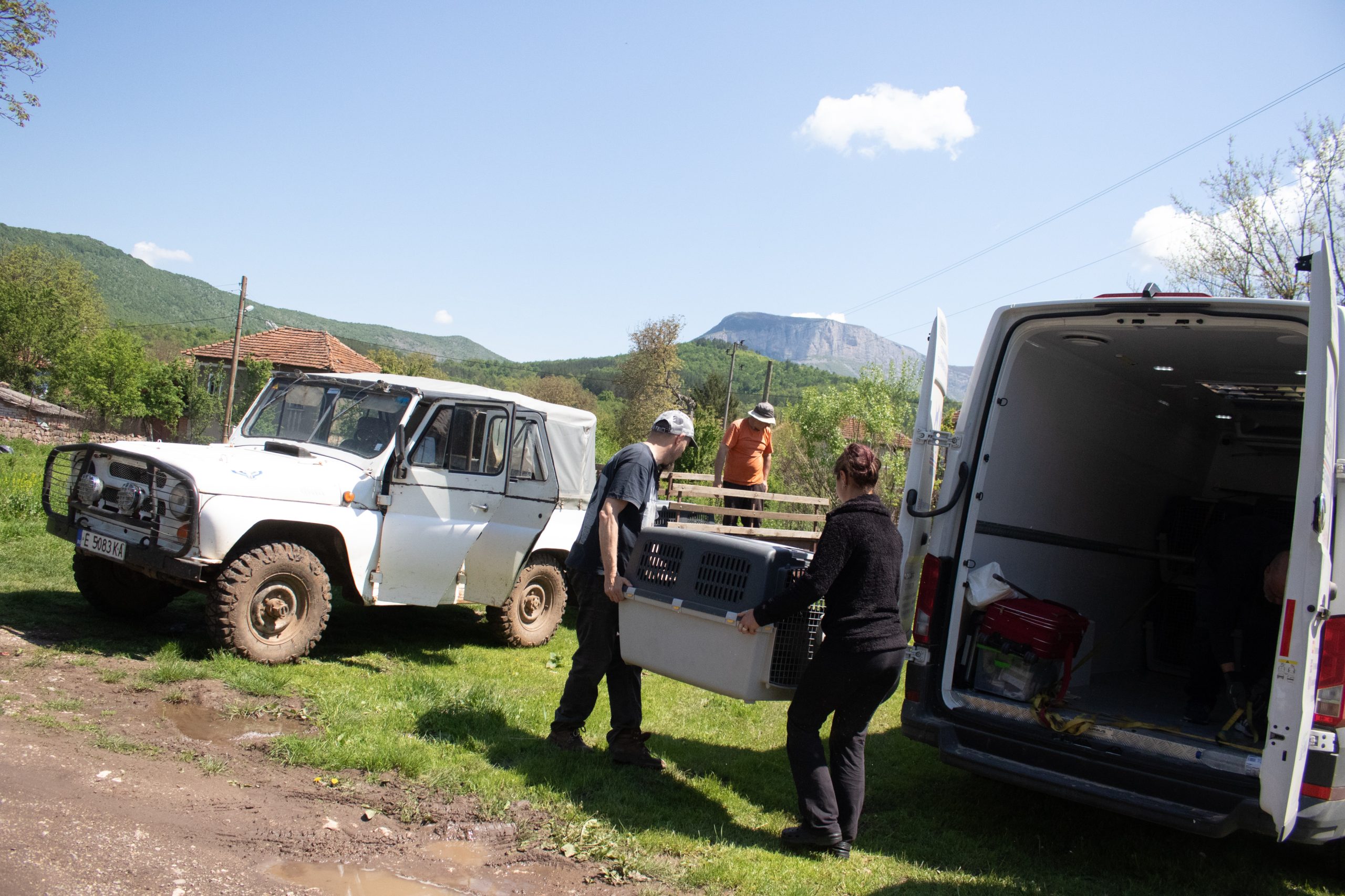
- In total 76 Black Vultures were imported to Bulgaria in the period 2018-2022 and 6 were or became non releasable and transferred to the captive breeding program. From the 70 released individuals 7 were released by hacking (5 from tree hack in Kotel. In total, 63 individuals were released by aviaries as follows::
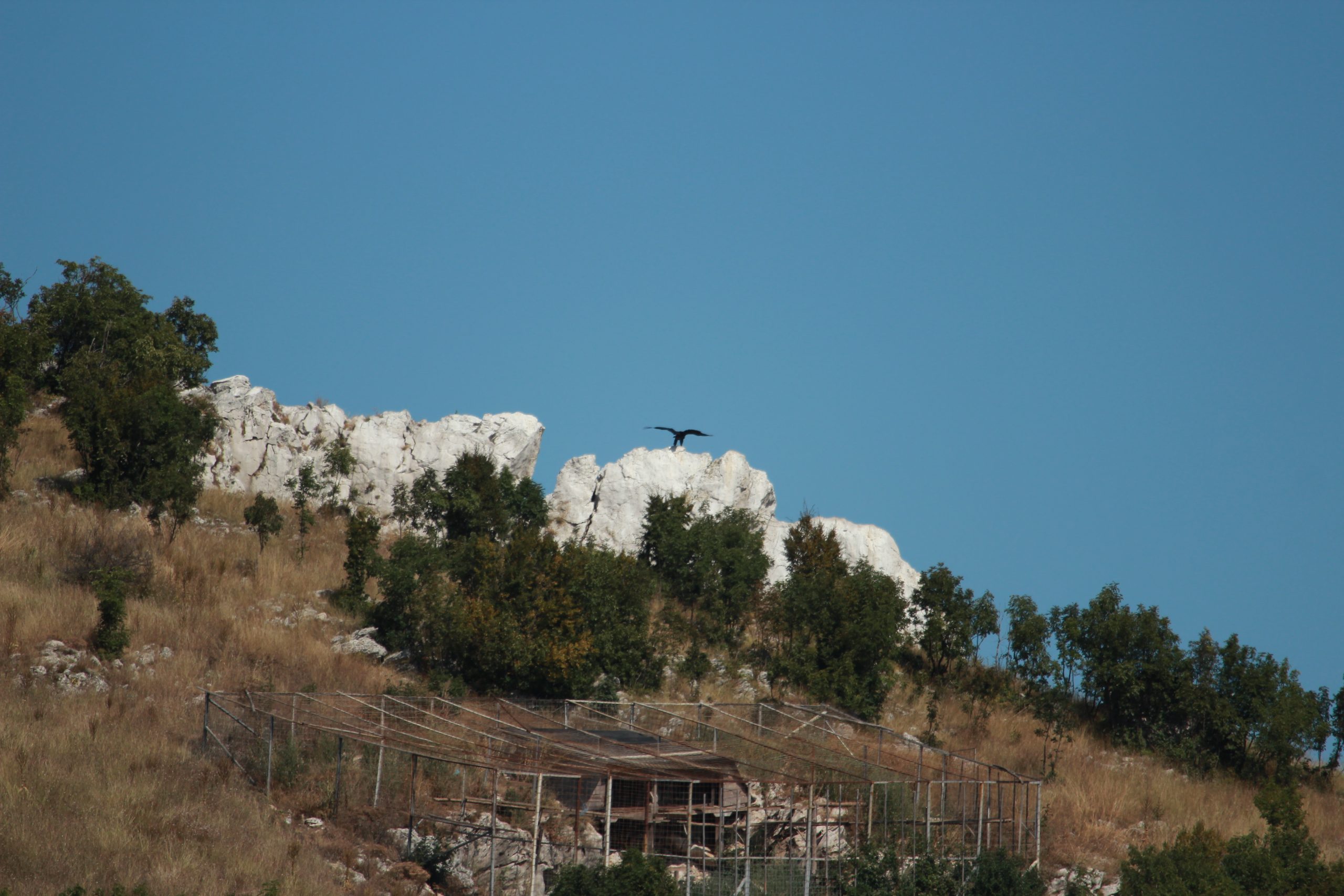
- 33 individuals were released in the Eastern Balkan Mountains
- 30 individuals were released in Vrachanski Balkan Nature Park. The adaptation aviary method has proven more successful than the hacking method. The result is five chicks hatched in the Balkan Mountains by 2023.
- The following causes of death were registered (number of cases in brackets): depredation (6), poisoning (6), drowning (3), shooting (2), exhaustion (2), preceding health problems (2), electrocution (1), collision with power line (1), hit by train (1), natural disaster (1), collision with vineyards wires (1). The most serious mortality factors were the depredation of newly released birds especially by jackals around the aviary and the feeding site in Sinite Kamani Natural Park and unintentional poisoning – placing poison baits against wolves/ jackals after their attacks on farmers’ livestock.
- Within the Griffon Vulture reintroduction program in Bulgaria (2010 – 2023) close to 400 Griffon Vultures were released from 4 adaptations and release aviaries. A total of 130 – 150 birds settled in 3 core areas with breeding colonies restored in: Western Balkan Mtns, Eastern Balkan Mtns and Southwestern Bulgaria. Nine colonies are established within the core areas (5-20 km distance between each other) in a total of 35 – 45 breeding pairs which raise 20+ chicks annually.
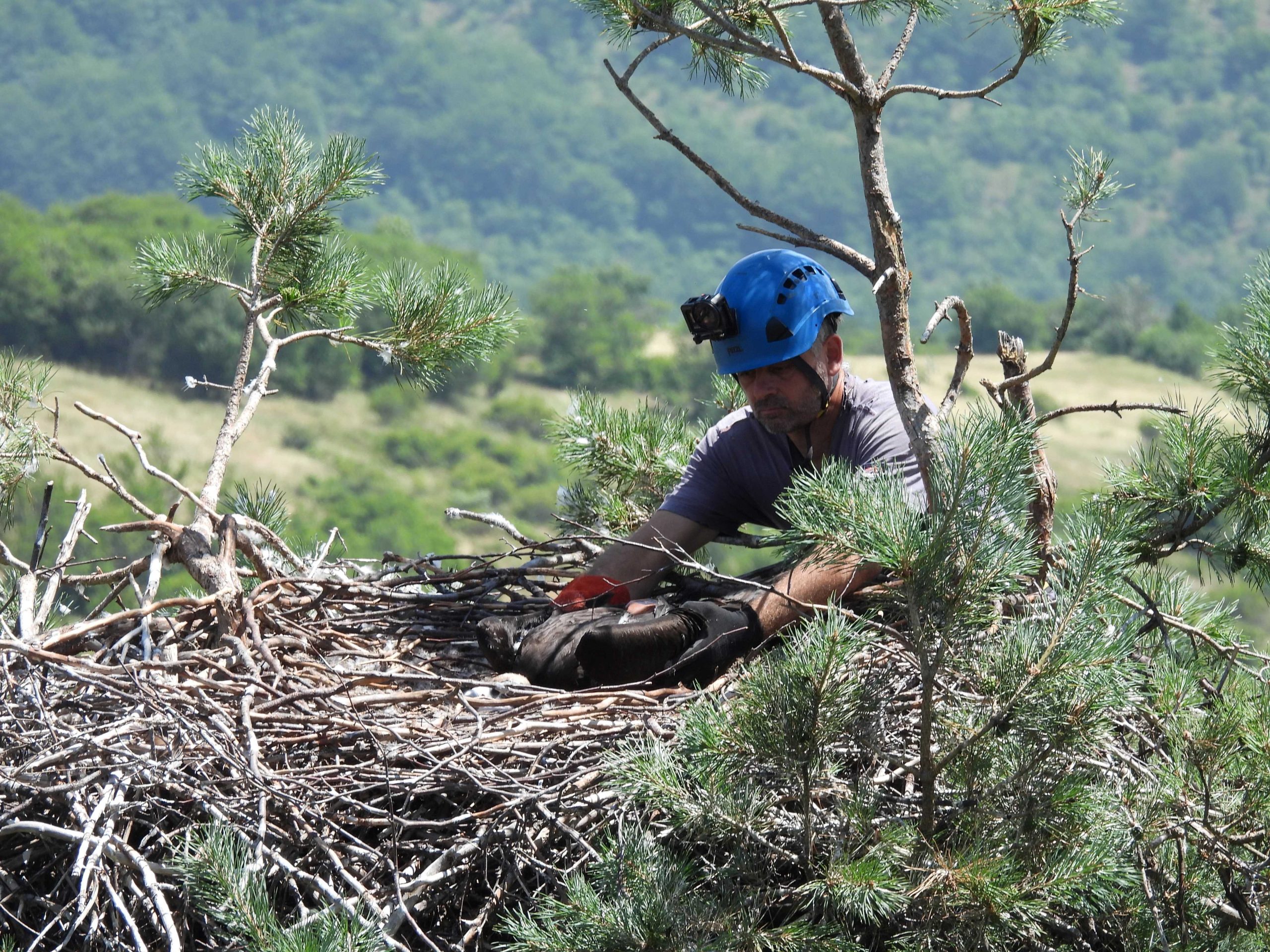
- In order to support and facilitate the initial establishment of breeding nuclei out of the currently classic range of the Black Vulture (coniferous trees in the Mediterranean), we established 80 artificial nests/nest platforms. In fact, the first laying of eggs in 2021, by the 2 newly formed Black Vultures pairs, happened in 2 artificial platforms in Sessile Oak trees, and also in such the first reared chick fledged.
- Hundred and twenty tons of food per year was deposited in the project sites along the Balkan Mountains – 60 tons of food were provided in Vrachanski Balkan feeding sites in 150 feeding events per year and the same amount of food, but on two feeding sites (SKNP and Kotel) in Eastern Balkan Mountains. Another 40 to 60 tons of livestock carcasses and offal a year were deposited at the vulture feeding sites in Kresna Gorge.
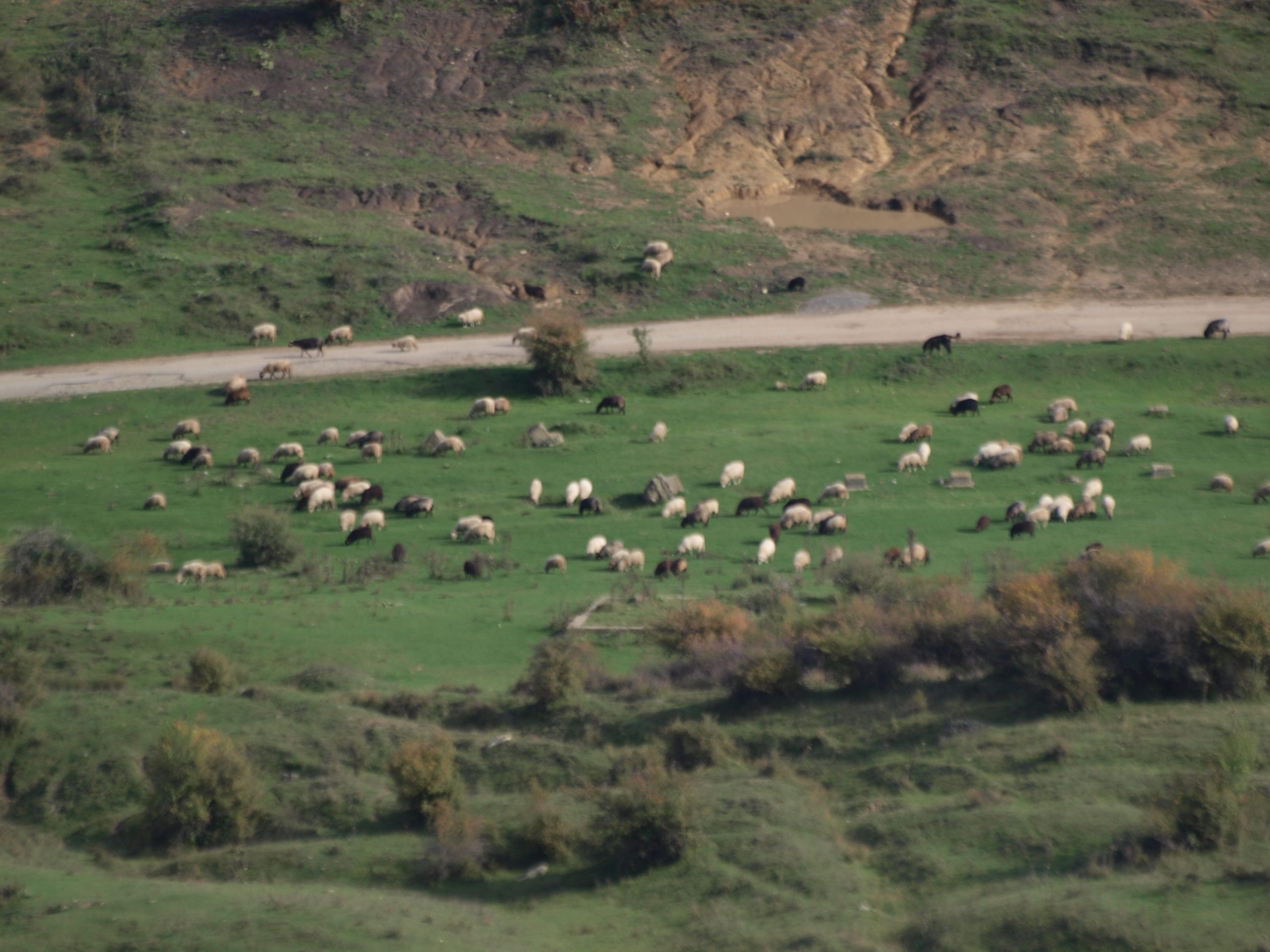
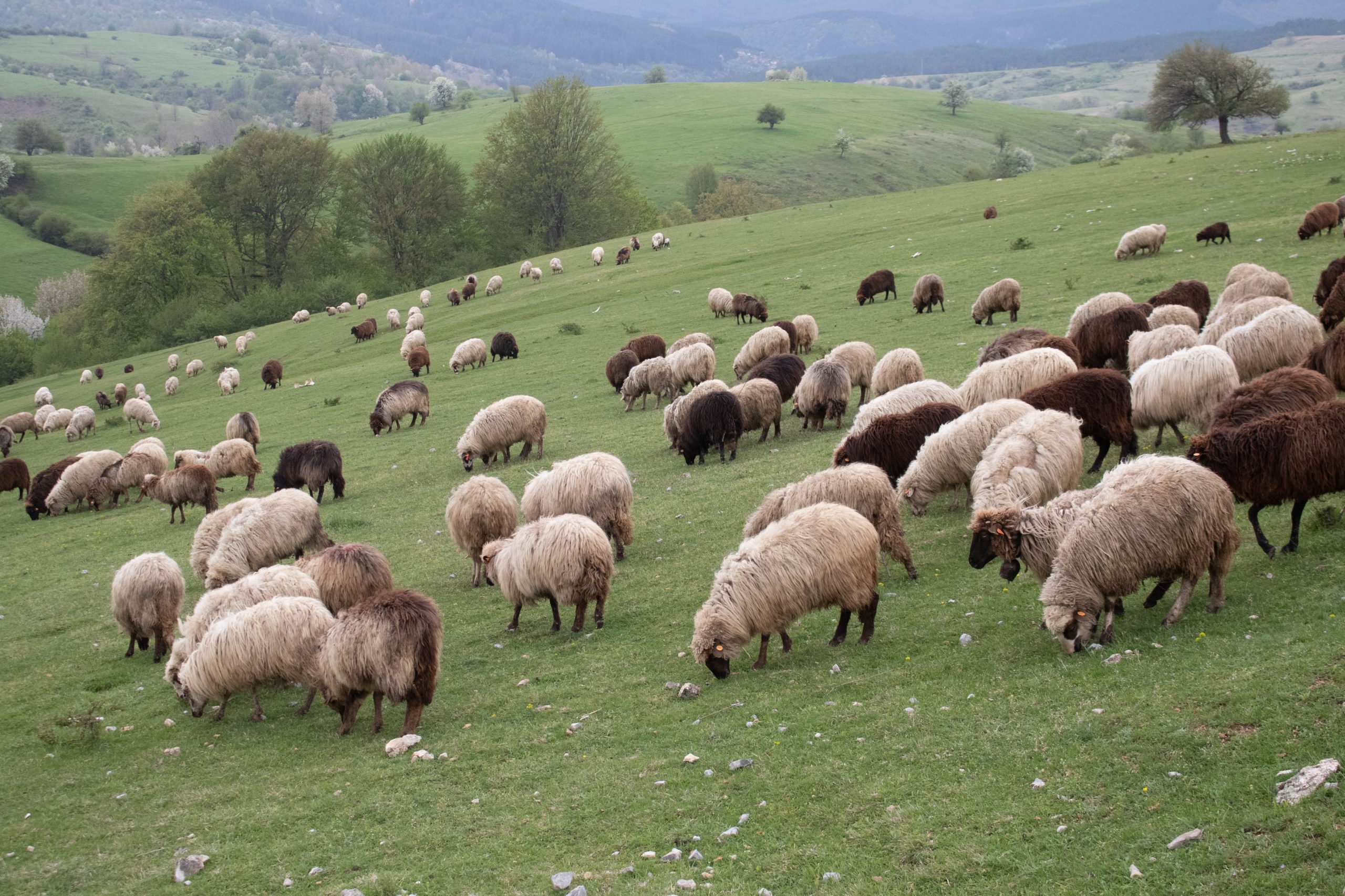
- The Green Balkans is running a sheep farm in SKNP raising more than 250 sheep that are grazing the pastures in the core area for the vultures in the site. The FWFF is running a sheep farm in Kotel raising more than 600 sheep that are grazing the pastures in the core area for the vultures in the site. Project herds of autochthonous cattle support the vultures’ habitats and conservation in Byala Reka SPA and Kresna SPA. Purchased within the project 93 ha of agricultural land that was integrated in agro-sylvo pastoral complexes and will guarantee the minimum required habitat management in favor of the Black Vulture colony in the Eastern Balkan Mountains.
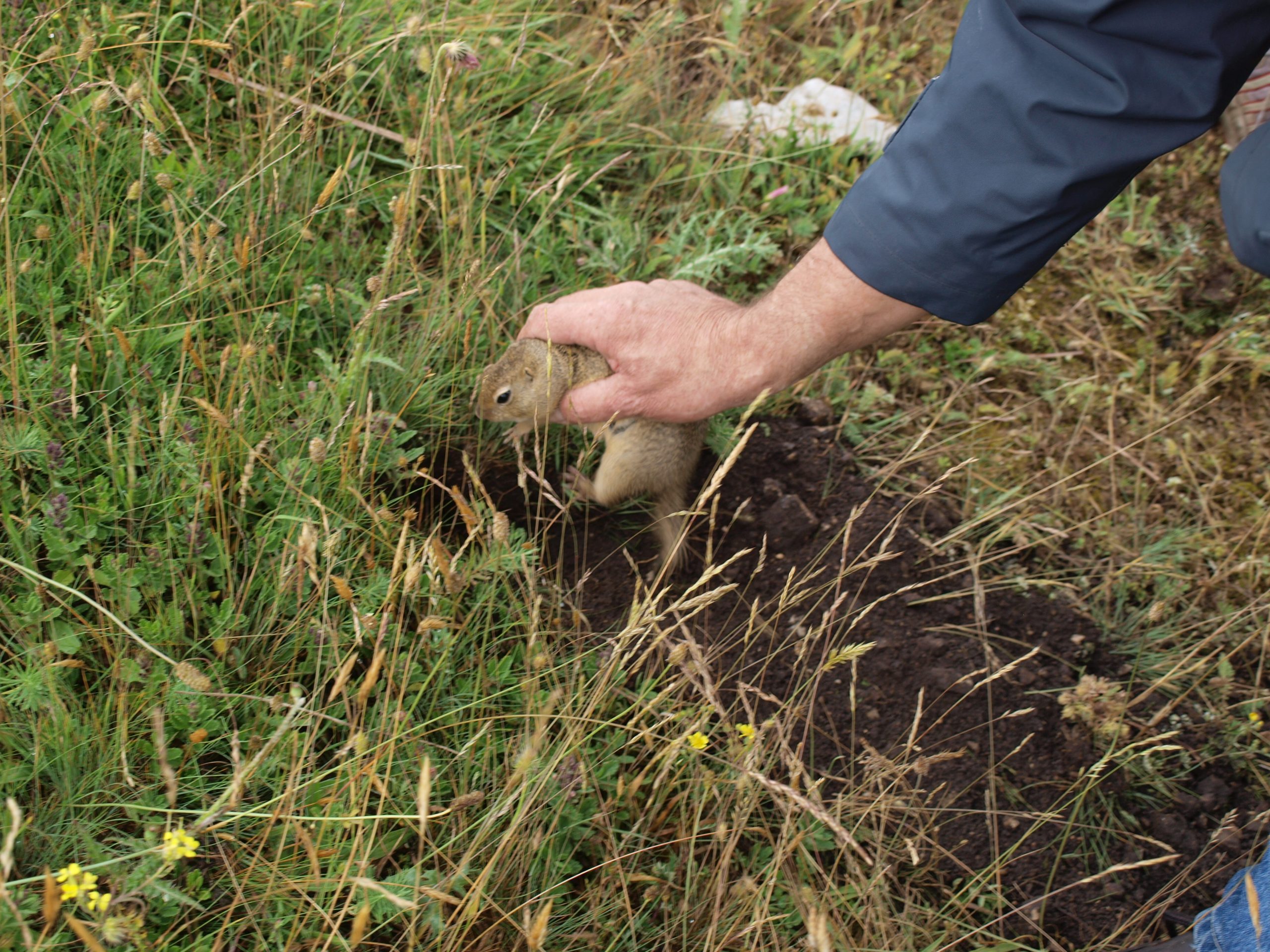
- European Souslik was restocked in SKNP and reintroduced in Kotlenska planina SPA near Kotel and its habitats are now maintained by extensive grazing of the above-mentioned sheep herds. It was proven the use of souslik in the Black Vulture diet in the project area.
- All released Black Vultures and 10 more Griffon vultures were tagged with GPS/GSM transmitters. The project introduced the Early-warning system for wildlife poisoning based on intensive GPS-tracked vultures which is a serious breakthrough in the fight against the poisoning of wildlife. The GPS-tracked vultures are now integrated in a complex system for intensive observations online and related on-site visits and in-time reaction in case of poisoning. This is also an important preventive tool for the identification of poisoning hot spots and addressing the underlying causes.
- The feeding site operation in an area with a permanent wolf presence is the second most effective tool to reduce vulture mortality. Maintaining permanent feeding sites for vultures in regions of sympatric presence with wolves is an irreplaceable conservation tool. The existence of an aviary with Griffon Vultures inside, placed just at the feeding site increases the attraction of wild and free-ranging reintroduced vultures and this is a way of keeping them away from occasionally present and potentially dangerous (poisoned) food.
- Huge efforts to increase the capacity responsible for reaction in case of poisoning institutions were made. The project team also participated in the development of the Bulgarian Anti-Poisoning Strategy – adopted by the Ministry of Environment and Waters in Bulgaria in 2021.
- 99 electrical pylons and 38 inter-pylons spaces were secured. Hopefully, the Black Vultures turned out to be less prone to electrocution compared to Griffon Vultures, probably because they prefer landing on the ground if there is no suitable tree or rock instead of power line pylons.