The programme has been started by FWFF in 2002, aiming to reduce the total number of poisoning incidents of wildlife in Bulgaria, including different sources: agricultural chemicals, poison baits, rodenticides and others.
To achieve that ambitious goal FWFF has been working in coordination with government agencies, NGO and local communities to address the issues and to establish an action plan.
An important part of this long-term Program is the education of local people on the effects of poisoning on wildlife and the dangers it poses to livestock and the pets, as well as lethal threat it potentially poses humans. Moreover, a unique Compensation Program for depredated livestock and Guarding dogs’ donations to farmers was launched in 2002. Nowadays, FWFF has started Reintroduction of Fallow deer in order to verify wolf’s available food and stop the great press over livestock causing man-predator conflicts and leads to illegal poisoning. Few FWFF farms at different part of Bulgaria act as model ones to local farmers and demonstrate how to deal with predator’s attacks. Three feeding sites for vultures are constantly loaded to prevent reintroduced birds from illegal poisoning. Recently, FWFF team is spreading the long-running conservation experience with fighting poisoning of wildlife as lecturing and presenting on international conferences and workshops, as well as preparing of scientific papers. From 2018 FWFF is exporting and implementing of an Early warning system for wildlife poisoning with GPS tagged vultures’ tracking.
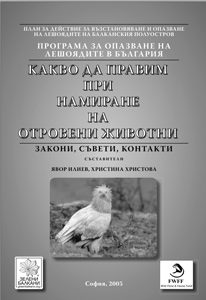
FWFF Antipoison campaign started in 2001 for the reason and intention to alert public about great danger of setting poison, FWFF printed two type of posters in thousands copies, which served as a reminder that poisoning is an illegal action under a Bulgarian law.

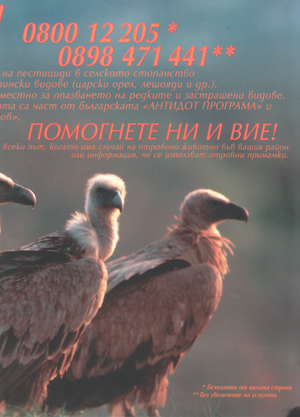

Fig.1. Printed information material to alert public for poisoning of wildlife (2002)
For a few years the posters suggested a free-phone number to report poisoning incidents. Nowadays that signals are received to the number 112 officially, but we get most of them rather from direct messages and calls. The signals were tracked by FWFF local teams in Kotel, Kresna Gorge, Sakar and Vrachanski Balkan, which are in charge of collection of carcasses- suspected for illegal poison baits.
From 2002, we built strong relationship and started investing in the capacity of the Toxicology Lab of the National Vetinary Institute in Sofia in order to make analyses of poison samples. As a result, a database of the types of chemicals that are used in poisoning was set. We provided freezers, instruments and consumables as well as expertise from international experts in order to proceed poison samples.
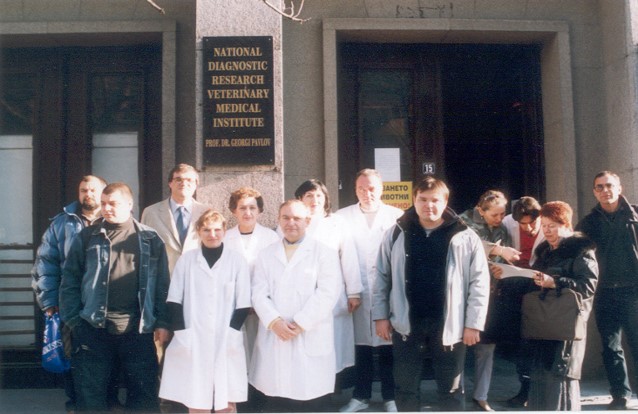
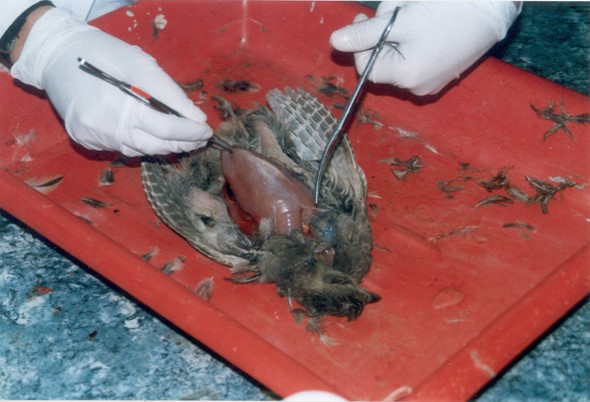
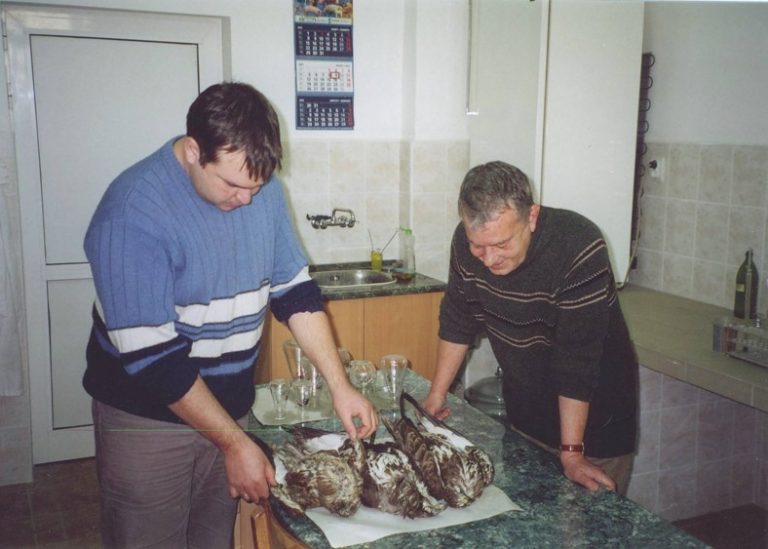
Fig.2. First toxicological analyses of poison wildlife in 2003 were supported by FWFF team
FWFF launched workshops of the National Against – Poison working group annually. They were usually hosted by the Sofia Zoo Education and Training Center. The working group was established by over 30 representatives from Bulgarian nature conservation NGOs and the concerned authorities.
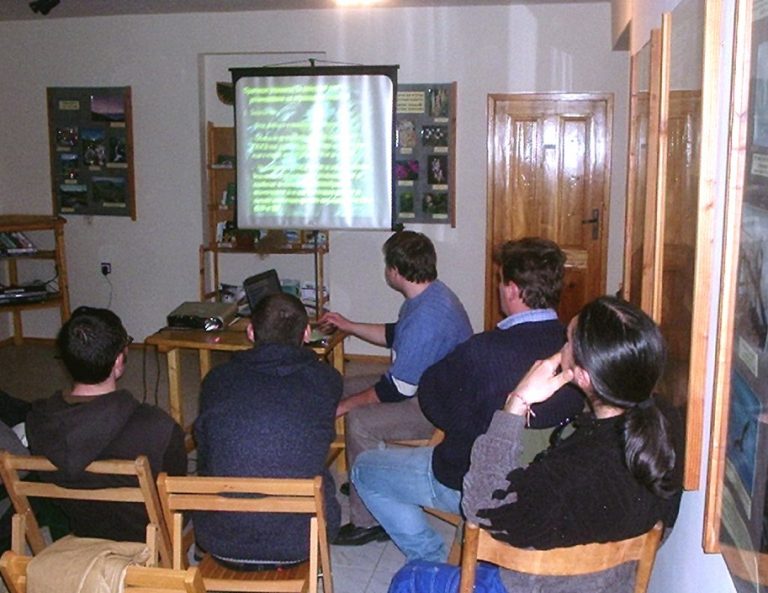
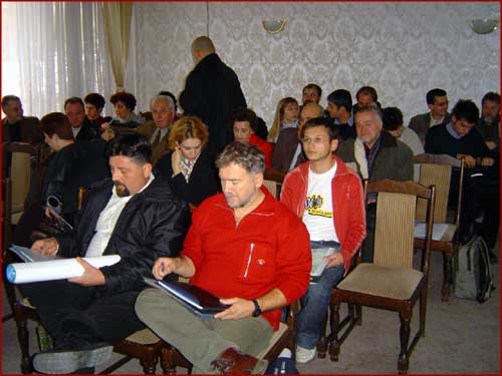
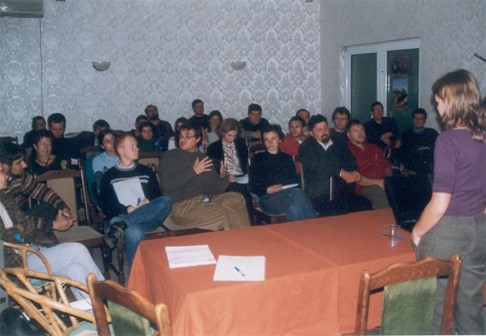
Fig.3. First National Against poison Working group meetings and an international seminar in 2004
In November 2004 in Sofia it was held an international seminar for the anatomopathological and toxicological investigations of poisoned wildlife.
The Anti-poisoning Program of FWFF was part of the Balkan Vulture Action Plan, which involved a number of NGOs in the Balkan countries and financially supported by Frankfurt Zoological Society.
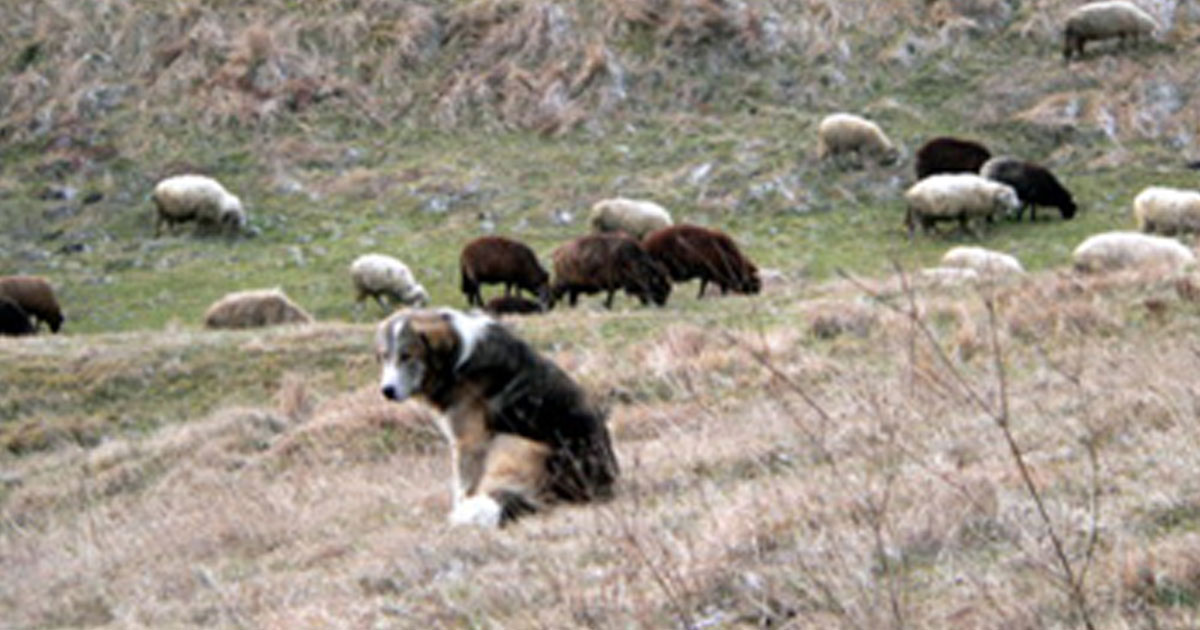
Meanwhile, FWFF established a Guarding dog project in SW Bulgaria to donate working Karakachan dogs to the herds that were often attacked by predators and thus to reduce the tension between shepherds and wolves. The project was supported by the Cottonwood Foundation and later on by the PHARE Programme, a European Union’s initiative, which provides grant finance to support its partner countries to the stage where they are ready to assume the obligations of membership of the European Union.
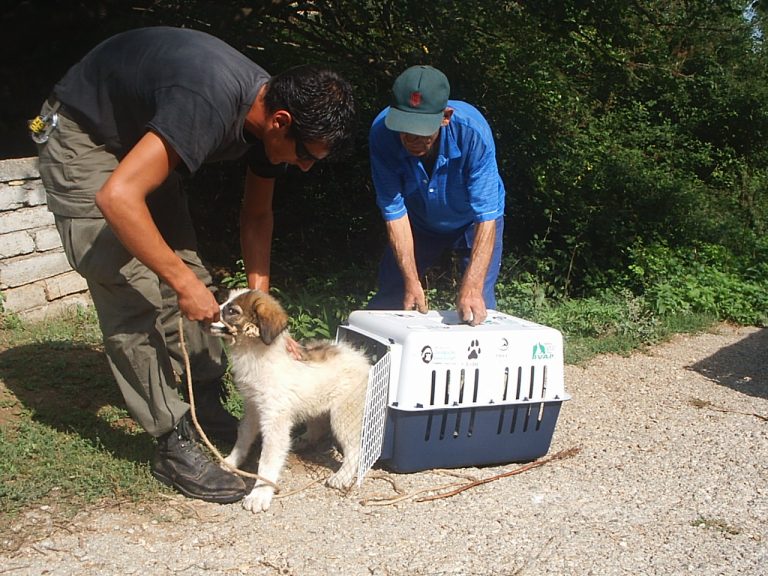
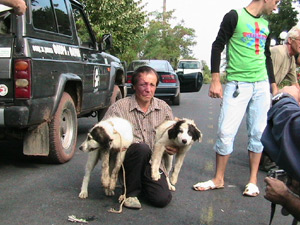
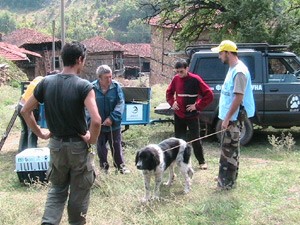
Fig.4. FWFF teams donate Karakachan dog puppies to livestock breeders to serve as Guarding dogs
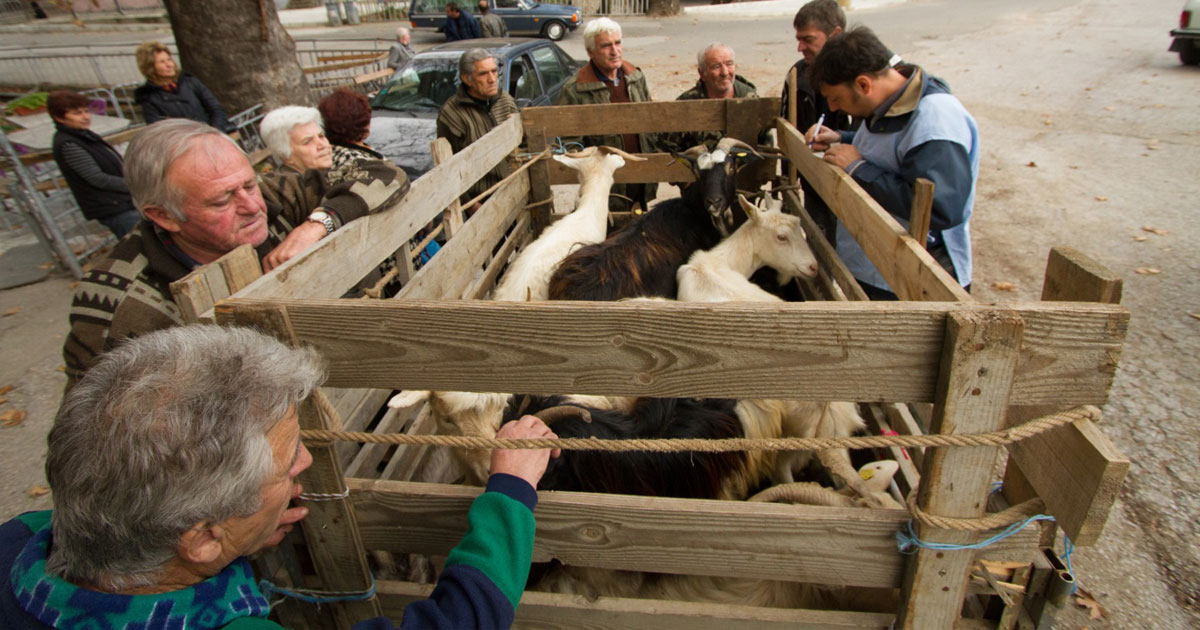
FWFF established the Compensatory Program for loses of the livestock due to predator attacks in SW Bulgaria in order to stop the illegal use of poison baits in natural environment. The Program was extended in the Balkan Mountain, where the reintroduction of vultures was planned to start soon, thanks to the support of the Rufford Small Grants and Whitley Foundation in the UK.


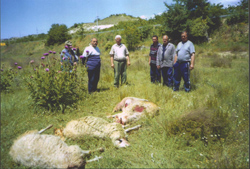
Фиг.5. Разследване на нападения от хищници и компенсации на фермери (2005 г.)
Our prior efforts and know how provided for publishing of 48 paged Manual “Guide for legal action when poisoning incident appear in the natural environment” describing the legislative circumstances and the role of each institution when poisoning incident occur, together with WRBC Green Balkans. Eventually, the hard copies of the issue were distributed among the authorities and NGOs.
In the mean time, in 2004-2005 a strong grasshooper calamity happened in south Bulgaria, which brought a number of wildlife incidents and deaths caused by insecticides. FWFF initiated an urgent public campaign in the region then.
FWFF joined the network of organisations comprising Pesticide Action Network Europe PAN Europe Network therefore. In the next years we gathered more and more signals for poisoned animals and we succeed to analyze most of them.
The huge number of poisoned animals was detected on Trakia Highway, near the town of Pazardjik. Dead birds were collected from the road. On first impression, it seemed they were killed by collision with cars, but the analyses showed pesticide poisoning initially. The birds were mainly rodent feeding species- Buzzards and owls.
In 2005, many dead birds were collected under the power-line poles in Topolovgrad region. It was thought that the birds are electrocuted or just collided with the power-lines. The toxicological analyzes showed high contamination of pesticides and so the poisoning was accepted as a main reason for the mortality.
In the area of Pazardjik the members of the local hunting society have applied Lanate on 20 partridges that were priorly released as game. The hunters targeted to kill birds of prey. Therefore they successfully poisoned 12 Buzzards and a Peregrine Falcon.
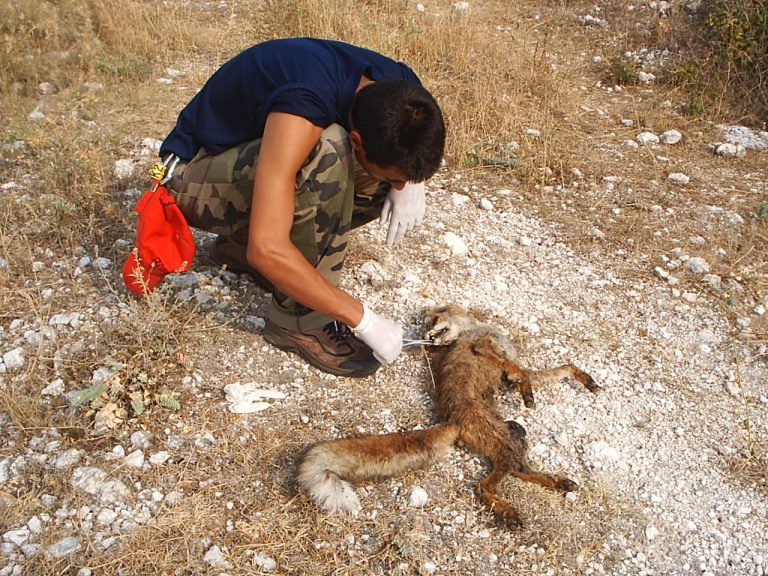
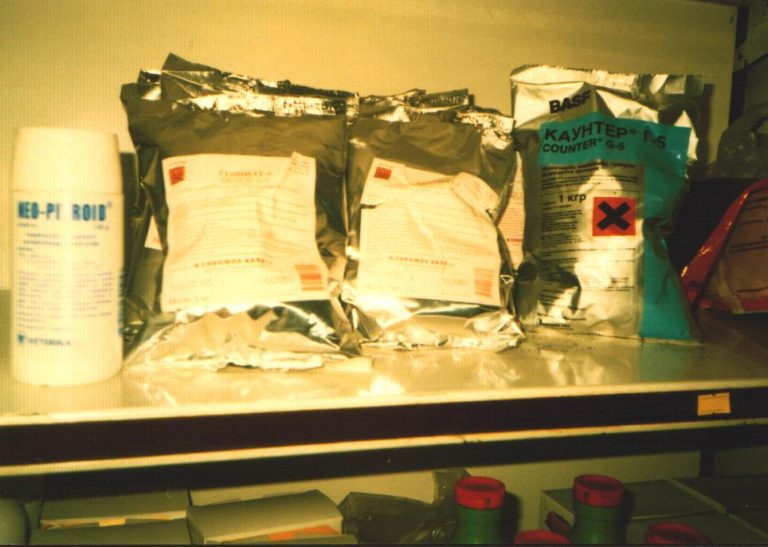
Fig.6. Hazardous pesticides and insecticides free to be obtained in the drugstores
Nine Jackals, a Golden Eagle and a Raven were poisoned near Veliko Tarnovo by the time. Analyzes showed use of poisonous contamination OP/CB.
The more we asked and searched, the more poison cases came out.
In 2007, we have received information for two poisoned bears (Ursus arctos). One bear was poisoned with CB/OP pesticides near the village of Rozino in the foothills of Central Balkan National Park. The poisoning was proved in the toxicological laboratory of NVI in Sofia. In another case reported by local people, a bear was poisoned with a bait of honey with pesticides. Since the stomach of the sampled bear was empty, we could consider that the case was similar, and may be the executor was the same.
Meanwhile two Egyptian Vultures on two different places in Eastern Rodopi were found dead. One of these was sampled and CB/OP poisoning was proved. The other carcass was too much decomposed so impossible to be analyzed.
A wolf in the enclosure of Balkani Wildlife Society in the area of Vlahi (Pirin Mountain) has been found dead. There were no symptoms of any illness, and only white powder was observed on one of the legs of the animal. The case was not sampled and analyzed, but it was considered that local people have poisoned the wolf, because they believe Balkani Wildlife Society were releasing wolves in the nature.
Buzzards, Egiptian vultures, ravens, dogs, wolves and others were reported to be poisoned and where possible some samples were analysed.
The situation with the heavy metals analyzes was still not clear enough, as no reference for comparison was available in 2008.
Between 2009 and 2016, 72 potential poisoning cases have been investigated.
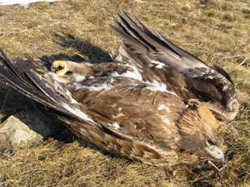

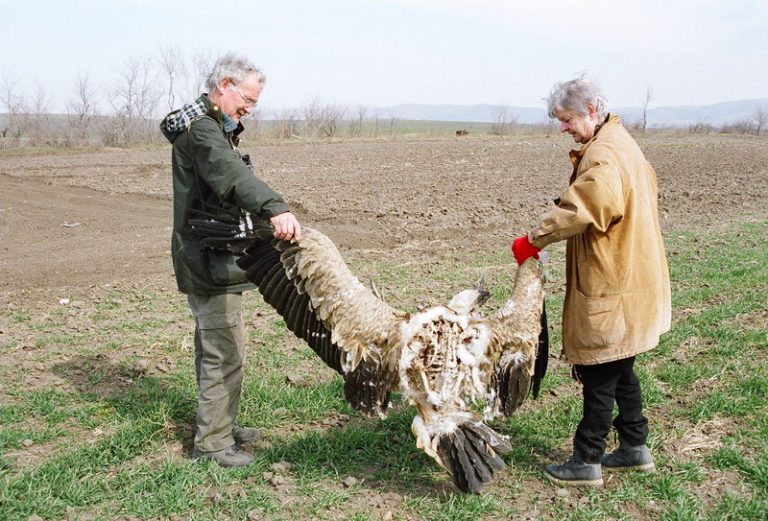
Fig. 7. Hundreds of poisoned eagles, vultures, buzzards and other wildlife species
FWFF team got actively involved with the on-going campaign for an EU ban on the use of Diclofenac and its dangerous analogue – Aceclofenac in the veterinarian practices of the European Union.
A petition was sent to to the EU and to some EU member states a formal request for them to start a Referral procedure for a withdrawal of marketing authorization of diclofenac under Article 35 of Directive 2001/82/EC, based on its risks for vulture populations in Europe.
Veterinary diclofenac kills vultures and caused a dramatic (99%) and rapid decline in the vultures in the Indian subcontinent – significant effort has been spent to successfully ban the marketing of this drug in that region, as non-toxic alternatives exist.
Anti-poisoning monitoring was conducted by registration of livestock depredation cases through the Compensation Program. Each reported case was analyzed. FWFF received over 100 signals for depredation for five years. The project keeps an actual data base of legally hunting cases over wolves in the region as well as on poisoning incidents, by all means.
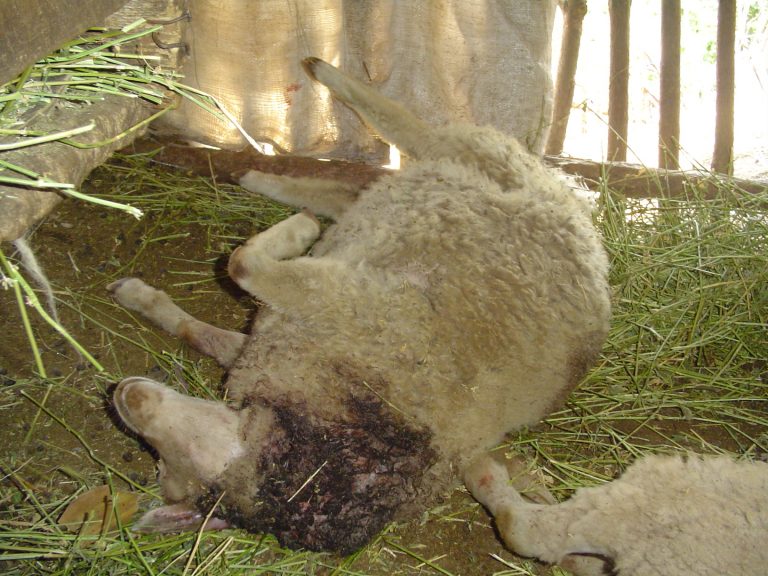
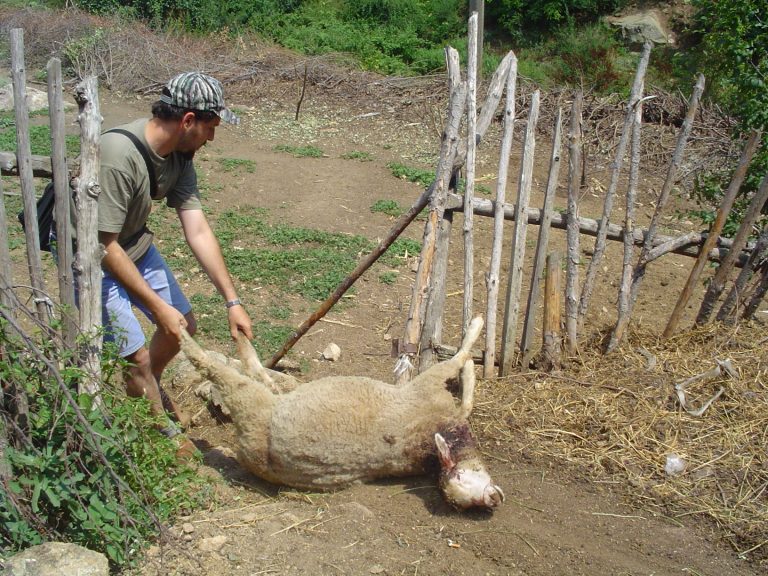
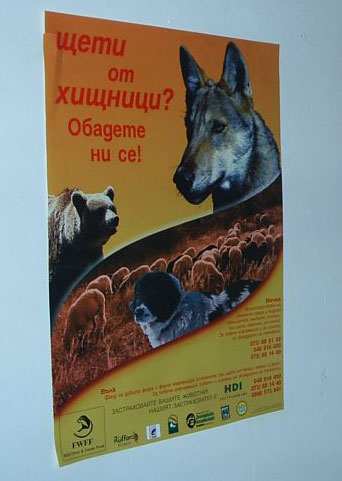
Fig.8. Hundreds of posters reminded farmer to call FWFF for depredation
The article “HOW TO AVOID DEPREDATION ON LIVESTOCK BY WOLF – THEORIES AND TESTS” E. STOYNOV, A. GROZDANOV, S. STANCHEV, H. PESHEV, N. VANGELOVA and D. PESHEV was published in Bulgarian Journal of Agricultural Science, 20 (1) 2014, 000–000 Agricultural Academy.
Two reports of FWFF intern Hans Wilpstra called “Predation on livestock by wolf (Canis lupus) in the Kresna gorge, Bulgaria” and a study on interactions between wolves, humans and scavengers in the Kresna Gorge “What do we eat tonight?!” were accomplished. It covers the territories of two municipalities –Simitli and Kresna and the total surface of the researched area is 400 km2.
The main questions for this research was: “How big is the risk on poison use in the villages within the research region? And what can be done to minimise the risk on poison use in the research region and Mediterranean Europe?”
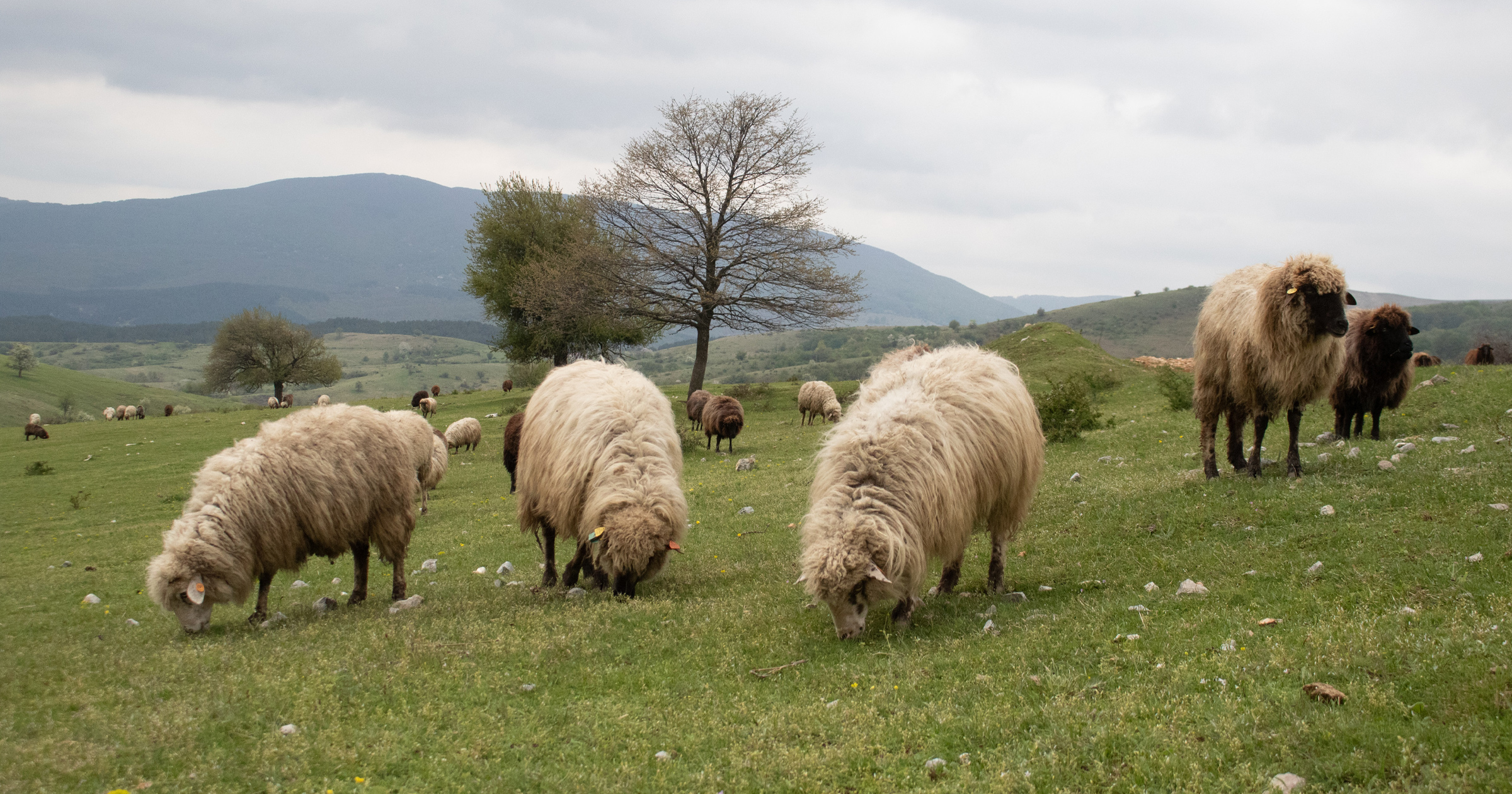
The results of the questionnaires showed that 384 domestic ungulates were killed by wolves annually. This comes down to an average of 7.23 % of the total animals of every village. But it varies from 0.25% to 21.28% of the total animals of the village. Bear depredation was only found in two villages- Oshtava and Senekos, where 11 individuals were killed. The depredation in the villages Rakitna, Oshtava, Mechkull and Simitli was significantly higher than expected on basis of the livestock abundance.
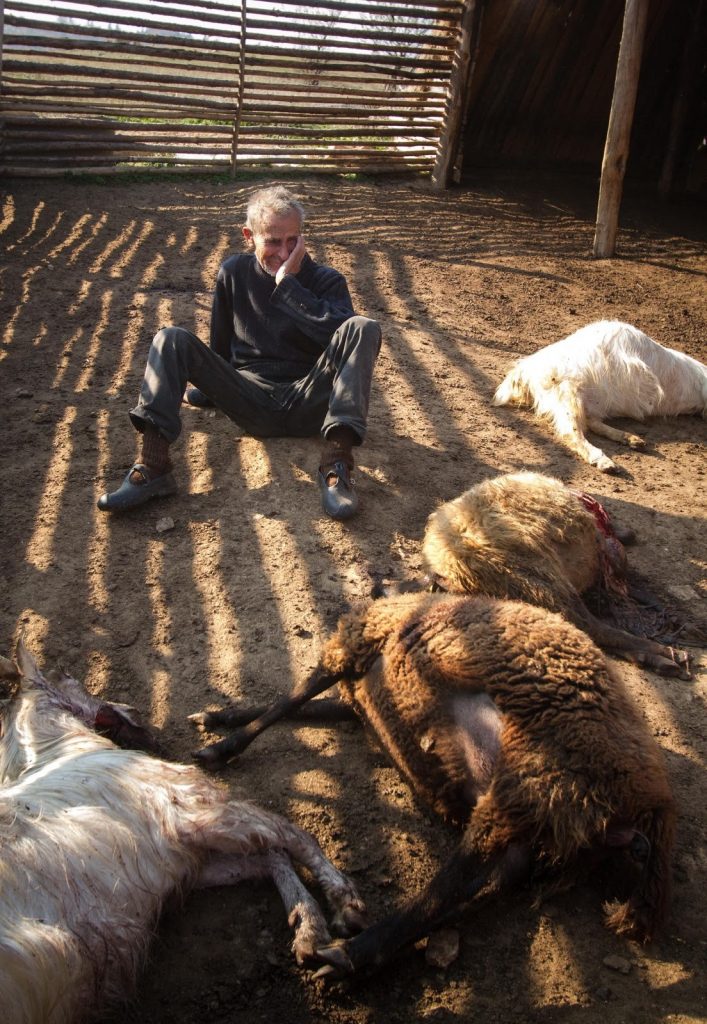

Fig. 9. Many cases of depredation happen in the sheep barn or in the yard during the night
Some of the most prominent poisoning cases after 2010 were as follows:
- April 2012– two Golden Eagles in the area of Sandanski were found poisoned. The RIEW was not able to establish and look for penalty to the perpetrator. Although later the perpetrator become known to the State prosecutor in Sandanski. Due to lack of proofs the court procedure was cancelled. We checked the possibility to restart the prosecution as a private case, but still the lack of proofs was an obstacle.
- December 2013, a poisoned goat was provided to our team for supplementary food to an Egyptian and a Black Vulture in the aviary, unfortunately the birds died soon. The Law did not provide any possibility to prosecute the perpetrator. We use the local people to press the perpetrator and to let him stop using poison in future.
- March 2015 a case of illegal poisoning has been investigated near the village of Vlahi in Kresna SPA. Again it was set for killing wolves, but the bait’s preys were three shepherd dogs and a Red fox. FWFF team and RIEW inspector has visited the place, but as a game species according to the Hunting Law, the fox death had to be officially registered by forestry officer. Even after we called the Forestry Agency, there didn’t come any representative. This time we called the police and the local veterinarian. Although the official procedure was better processed, there was again failure prosecution. Unfortunately, the reason for the missed opportunity to underpin the case under the Biodiversity Law was lacking of protected species victimized.
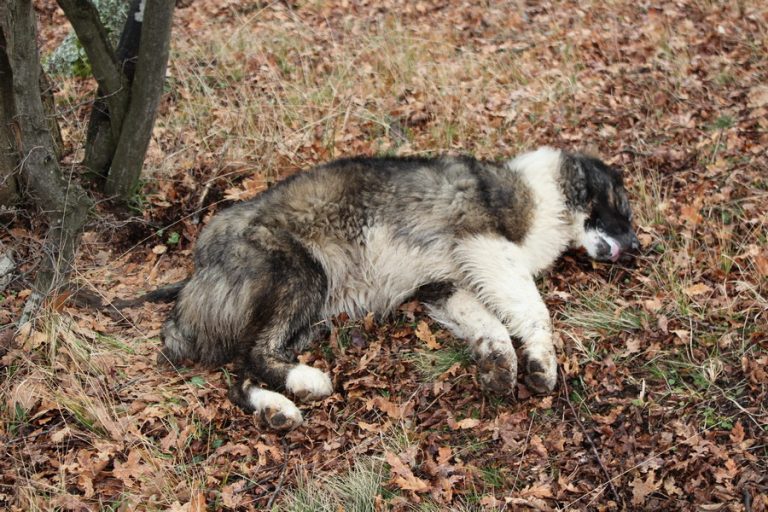
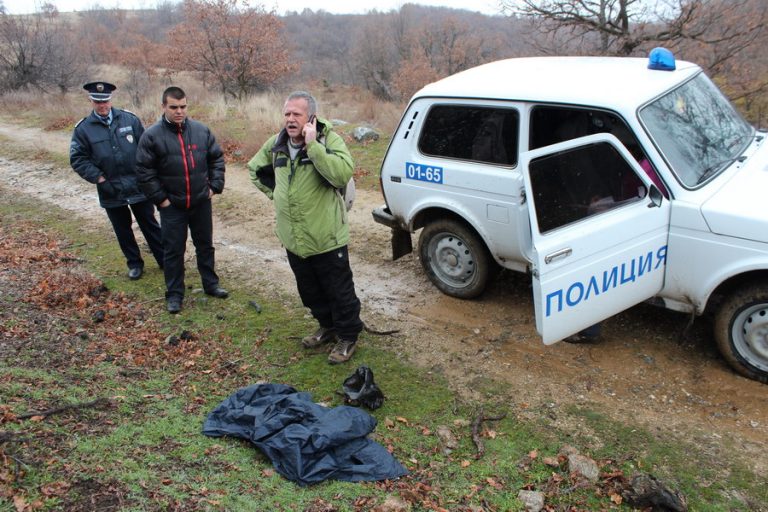
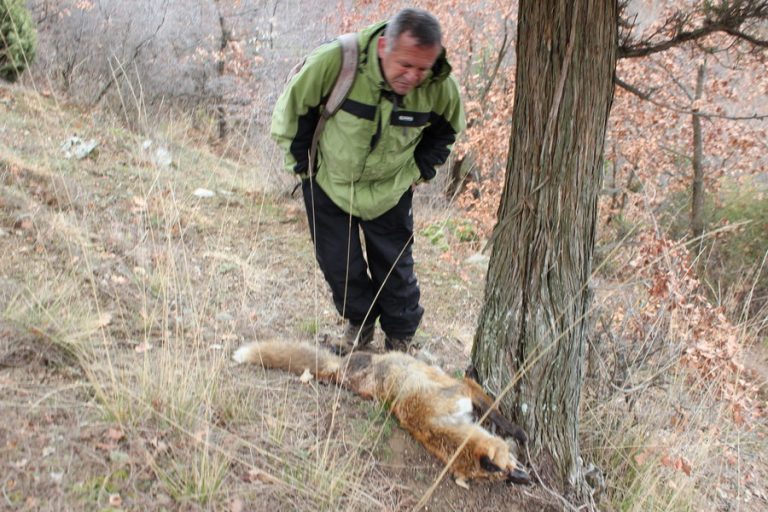
Fig. 10. Foxes, badgers, shepherd dogs are the most often mammals’ victims from poisoning
Improving the legislation was needed, as the poisoning is hard to be proved and thus inapplicable.
Within the project LIFE for Kresna Gorge, started in 2012, our team took part in the revision of the Hunting Law. FWFF prepared a letter, which was supported from seven more NGO and institutions (VCF, Green Balkans, BSPB, Sofia Zoo, Natural-history museum in Blagoevgrad, Advanced Wildlife Technologies, Spatia Wildlife) for changes in some of the texts in the Law. In short, we proposed a new text to be included which says: lay of poison should be considered as a hunting act, no matter is there are or aren’t any animal victims from the group of “hunting species”. The text wasn’t taken into consideration from the Agriculture Commission in the Bulgarian Parliament.
Still any attempts failed to prosecute the perpetrators of poisoning. Pressure on the executive level (local public prosecutors and judges) of Bulgarian judicial system does not give any results so far. Thus there is now an urgent ongoing attempt to political reforms over the judicial system in Bulgaria. Although there is a strong group maintaining the status quo and the reforms are still under question to happen, the conservation NGO are among the fiercest opposition to the old system.

Fig.11. The Bulgarian Parliament, lobbying for revision of the Hunting Law
LIFE for Kresna Gorge project launched a number of five-year conservation activities on place in order to suppress the conflict man\predators there. Reintroduction of Fallow deer to boost the natural food for wolves, providing consultancy for farmers to shift from sheep and goat to cattle in the places of the densest wolf population, researching and monitoring of the conflict are among the actions done.
Within the project was published a research paper called “Is the Wolf presence beneficial to Vultures in Europe?“ We suggested that increasing of wolf population over the optimal number for a certain area should change (lessen or stop temporary) the conservation actions.
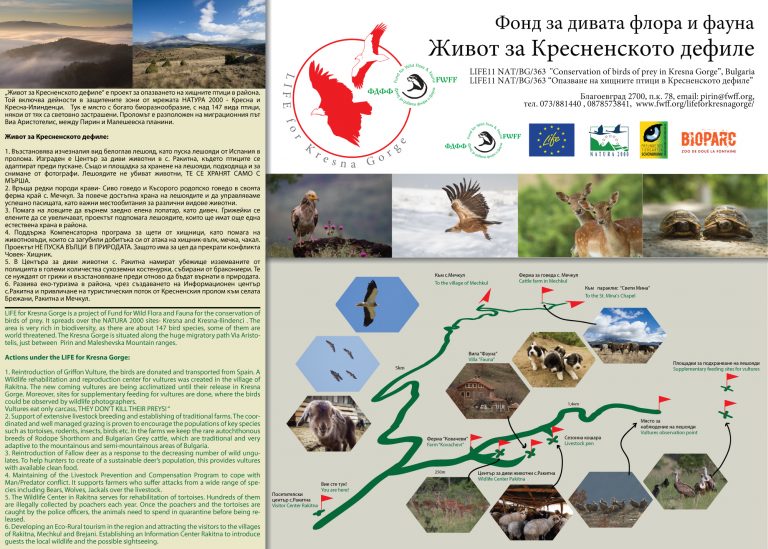
In 2014, the Équarrissage, which was responsible for transportation of all dead livestock from the farms, quit the long-distance trips to Southern Bulgaria. The mayors were urgently told to find a local decision for storing of livestock carcass of thousands of farmers. The local governors of Simitly Municipality, 17 settlements and 17000 people, where the FWFF vulture feeding sites are situated, officially asked for deposit all the carcass on vultures’ restaurants.
The last problem for farmers and the governors could have become an opportunity for vultures’ conservation or a big trap for local biodiversity, it was and still is up to our action and efforts. On one hand, the free carcass available everywhere is an easy source to lay poison for predators and kill the entire vulture colony, but if organized well the transportation of carcass to the feeding sites could have saved many animals were to die from poison otherwise. What is more, the abundance of food could have led to flourish of vulture population.
Poison is the main threat to vultures worldwide, as identified in the Vulture multi-Species Action Plan, a comprehensive strategic document that highlights priority for action for the conservation of 15 species of old world´s vultures, and that was recently adopted by the signatories of the Convention for Migratory Species (CMS). FWFF attended the important workshop for the conservation of vulture populations in Europe, Central Asia and the Middle East took place from the 25th to the 29th of October 2016 in the National Park of Monfragüe (Spain).
Meanwhile, up to 2016 the Compensation Program donated as compensation for depredation about 400 sheep and goat, over 150 guarding dogs, insurance policies for more than 500 animals. It helped directly 530 farmers, but more than 1500 were indirectly benefited.
Although, in March 2017, three wolves and more than 30 vultures were poisoned in Kresna Gorge. The poison bait wiped out the bigger part of the reintroduced griffon vulture colony. The search of the baits on the ground took several days of further poisoning. Finally, the killer poison bait was found 20 km from the vultures’ roosting site, where most of their corpses were found.
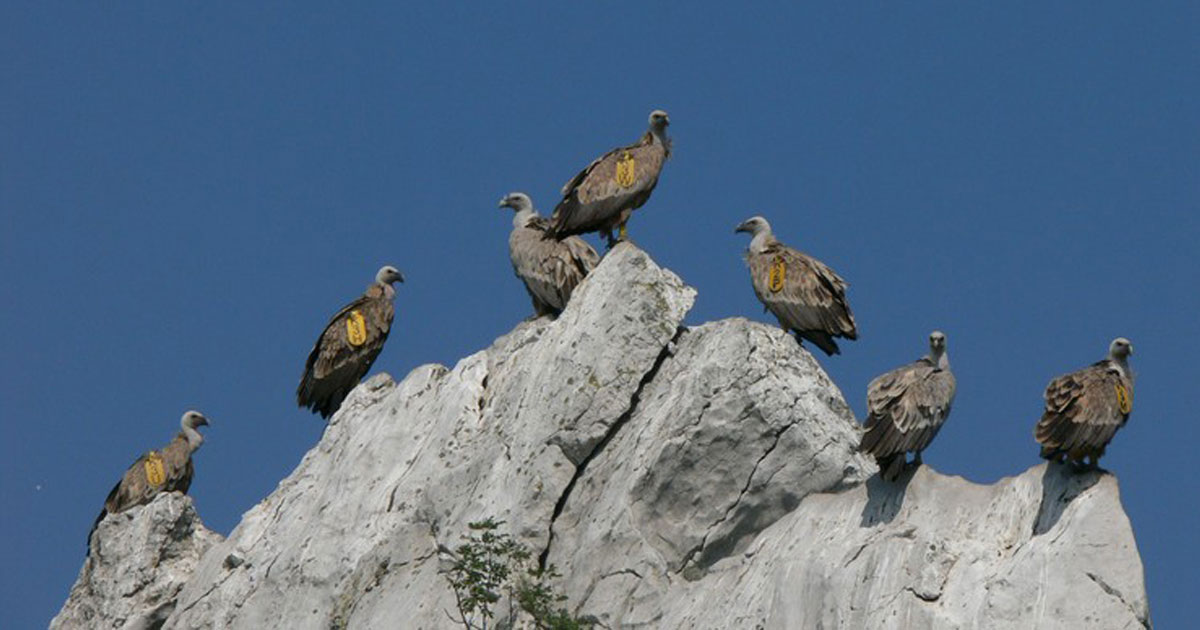
An innovative idea to recruit vultures to search for poisonous baits was developed by FWFF in 2017 as a part of Vulture Return LIFE 14 NAT\BG\649 and after the tragedy in Kresna Gorge. GPS/GPRS transmitters attached to captured turned them to “poison detectives”. The current location was delivered at every 10 minutes to the project team. The places where birds stay for more than half an hour were checked on the ground. First five transmitters have been placed on Griffon vultures in Kresna Gorge therefore.
In addition, an international work meeting, devoted to the illegal use of poison against wildlife took place in Sofia on April 25, 2017. The meeting was held within the Vultures Back to LIFE14 NAT/BG/640 project. It was attended by representatives of the Spanish ministry of environment, the Vulture Conservation Foundation (VCF), as well as one of the greatest Spanish experts in analysis of poisonous substances and all the competent authorities in Bulgaria and conservation NGOs.
The Spanish experts presented in detail the institutional scheme in operation in Spain to combat, prevent and sanction the cases of illegal use of poisonous baits. The scheme and specific actions in collecting evidence and analyzing samples were also presented.
The discussions, with the participations of all attendants, unfortunately revealed that there is no clear action plan in case of finding of poisoned wild or domestic animals. The very institutions get practically confused and cannot adequately react and handle such situations. This results in the poisoning of more animals. The lack of sanctions and effective punishment for such violations create a sense of impunity and are a prerequisite for new crimes.
In April 2018, a GPS collared wolf was found poisoned together with a fox. The wolf was very quickly found due to his GPS collar. Many other cases remained unrevealed.
А study by Parvanov et al. (2018) and FWFF team revealed that poison used to kill wolves was the primary cause of 60% of all registered vulture poisoning events in the southern Balkans. Another study (VCF 2018) reported 446 vultures to have been poisoned in the region in the last 30 years.
In 2018, the first tagged griffon vultures called “poison detectives” proved the Early Warning System does work. A vulture called 1H-Wild moved to Pindus/Central Greek Mountains flew to Akarnanika (SW Greece), Messolonghi. The last data from the GPS transmitter suggested that 1H-Wild fed in the area of Agrafa and moved some 5km away, but then stopped moving completely. Our team visited the area and found 1H-Wild, almost fully decomposed. Before that, we alerted the Hellenic Ornithological Society and the Tzoumerka National Park. Near the site where 1H-Wild was last recorded they unfortunately discovered two more dead Griffon vultures, both untagged and unringed birds. Near the site of these two vultures was the carcass of a calf that was half eaten, and we believe that this was used as bait as nearby there was a plastic bottle with white powder residue. The remains and the chemical substance was collected, so that proper toxicological analysis were done to establish exact cause of death.


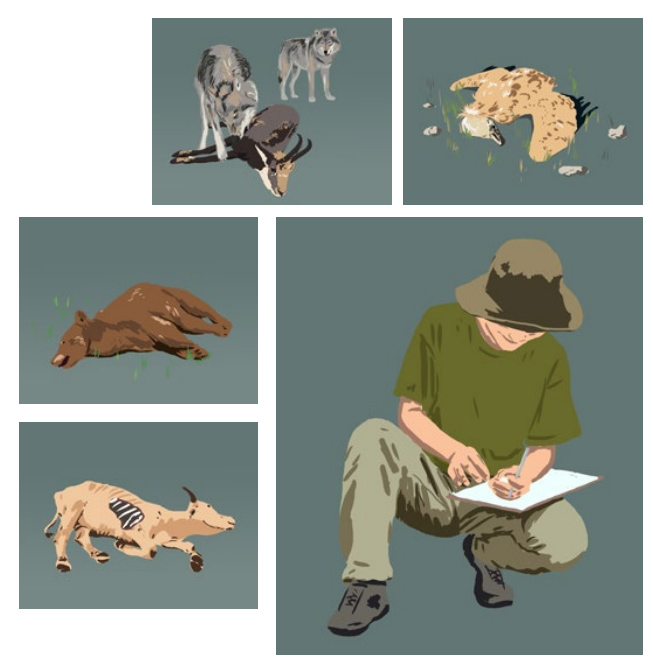
Once again, a tagged with GPS vulture sent “dead” signal in 2019 from a village in Vrachanska Mountain. In two hours our team located the place and visited it. Just on time we found the poison bait (a cow) and removed it in order to prevent more vultures’ landing and cut for future victims, although about 15 griffon vultures, few ravens and a Golden eagle were already killed. A huge public interest made prosecution act quickly. However, two years later there is nobody punished.
A mass poisoning incident marked the beginning of February 2020 in the Messolonghi region in Greece. Nine Griffon vultures have been found dead and two more poisoned vultures have been rescued in ANIMA rehabilitation center, while it was possible that more were yet to be discovered. From a distance, FWFF team supported and consulted Greek colleagues in searching the bait, to locate the place of poisoning and how to act immediately to secure the rest of vulture’s colony there. What is more, the Kresna Gorge colony was hit again in 2020 and 10 to 15 vultures were poisoned, but for a bad luck, there was no tagged vulture among these, neither was one nearby.
It turns out there were still two vital steps we still haven’t managed to make:
- Strengthen the capacity of competent authorities and urge them to finish their job properly
- To secure more GPS tagged vultures for poison detectives
There came the financial support in 2020 from Whitley Nature Foundation and the BalkanDetox LIFE to support purchasing of more GPS transmitters for vultures to be tracked, and for obtain juridical service for the crimes.
Following the catastrophic incident of poisoning of the Griffon Vulture colony in the region of Mesolongi in Greece in February 2020 our team took part in equipment of five Griffon Vultures with GPS transmitters by providing advisory and logistical support to the management body of Mesolongi National Park in Greece. FWFF provided three GPS transmitters, and a total of 5 were mounted on Griffon Vultures on March 6 and 7, 2020. Two of the birds were successfully rehabilitated from poisoning in February 2020, for which incredible efforts were made by the ANIMA Rescue Center (https://www.wild-anima.gr/en/ ) in Athens. The other three Griffon Vultures were equipped with transmitters and returned to nature after had been bred for several years in captivity at another rescue center in Greece.
Already five of six major vulture regions in the Balkans were covered by the Early Warning System in the midst of 2020, with the number of vulture detectives used increasing steadily with the help of donors such as LIFE, WFN, VCF and others.
Through the ‘BalkanDetox LIFE’ project, nine organizations work alongside various national and international stakeholders, ranging from government authorities to hunters and livestock breeders, to minimize this threat and achieve concrete results across seven Balkan countries (Bulgaria, Greece, North Macedonia, Serbia, Bosnia and Herzegovina, Albania and Croatia).
Until 2021, we detected “mortality status” of some vultures poison detectives in Western Greece (Ostrava, Kelli, Zlatar, Vardar, Markos, ОХ и Wild-1H), later on the birds proved poisoned. The Greek regions of Peloponnese and Aetolia-Acarnania attract hundreds of vultures annually because of huge cliffs and free-ranging livestock everywhere, but the authorities are still unable to stop and control poisoning, which certainly makes the regions an ecological trap for all vultures in Balkans.
Very dangerous proposal for changes in the Hunting Law at the end of 2020 consolidated all nature conservation NGO and research institutes in Bulgaria. Unexpectedly, in contradiction to Bulgarian legislation and international conventions, there was proposed to legalise poison baits for wildlife to respond the African swine fever threat and to reduce the wild boar population. A huge public campaign stopped the proposal to become fact.
A Griffon vulture, released in 2017 in Kotel mountain, was found almost dead under a power line in 2020. Unfortunately, the bird died in the Wildlife Rescue Center in Stara Zagora. After the autopsy and toxicological analyses have been conducted, the veterinarians confirmed lead poisoning.
In June 2021, a Cinereous vulture indicated “mortality status” near Dobinishte in Southwestern Bulgaia. The transmitter was found in a river, taken away from the bird, and the vulture was missing. We found a horse carcass nearby and poison substance inside. A raven flew uncoordinated around. A very bold behavior of the offender, who had poisoned the vulture, found the corpse and threw away the transmitter in the river. The protocol was followed and case is under investigation.