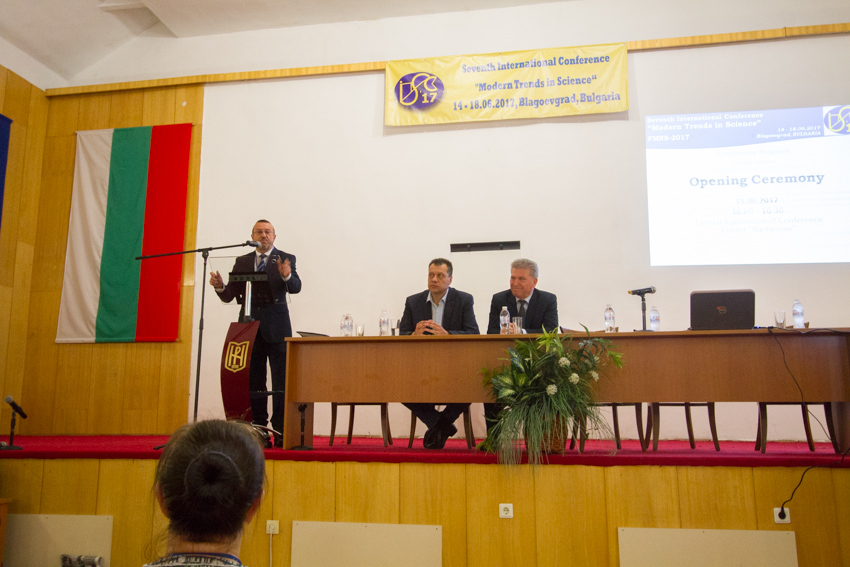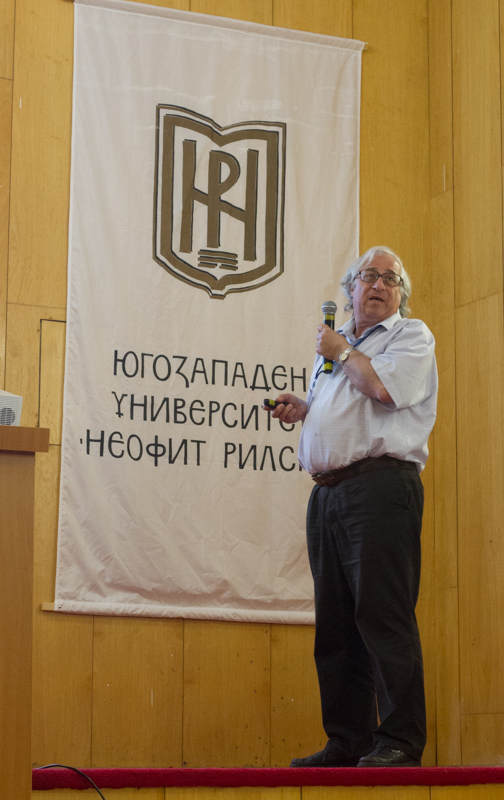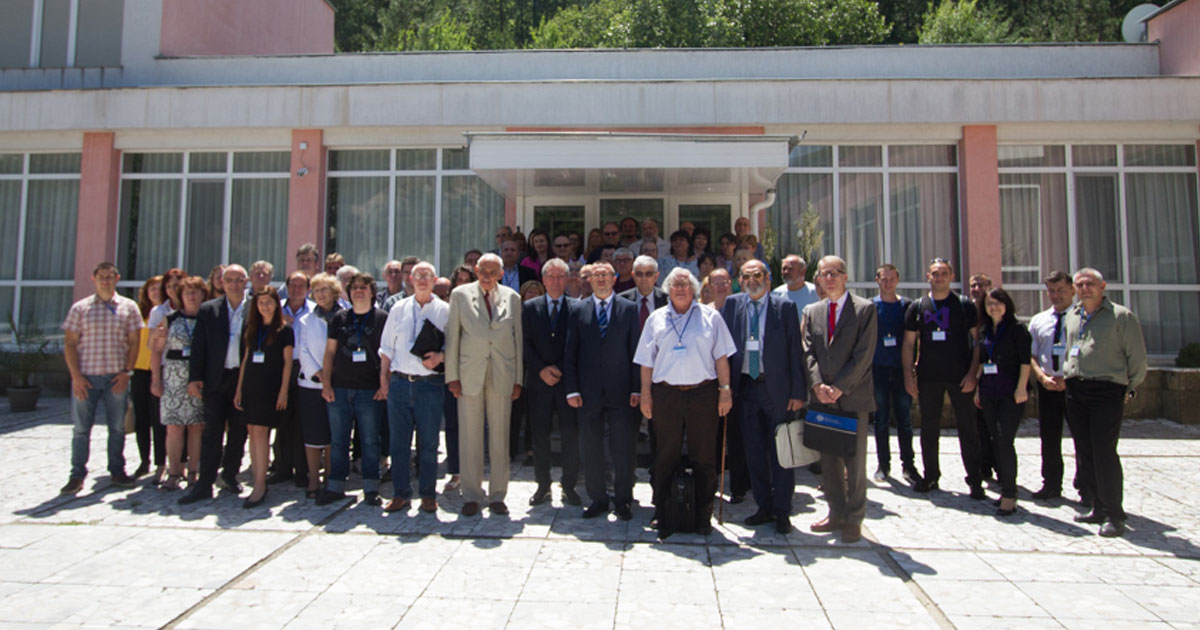
FWFF actively took part at The Seventh International Conference “Modern Trends in Science” (FMNS-2017) organized by the Faculty of Mathematics and Natural Sciences at South-West University “Neofit Rilski”, Blagoevgrad, BULGARIA.
The conference was held in the city of Blagoevgrad from 14th to 18th June, 2017.FMNS-2017 is a multi-disciplinary conference, which main objective is to provide a platform for researchers, academicians, practitioners, as well as industrial professionals to present their research results and development activities in the fields of Natural Science and Technologies. The conference provides opportunities for the delegates to exchange new ideas and application experiences, to establish research relations and to find global partners for future collaboration.
More than 250 participants from 17 countries attended and presented at the Conference.
During the conference a broad range of research and applied topics will be presented and discussed, covering the fields of:
Chemistry, Physics, Geography, Ecology and Environmental Protection, Mathematics, Informatics, Technical Sciences and Methodology in Education.
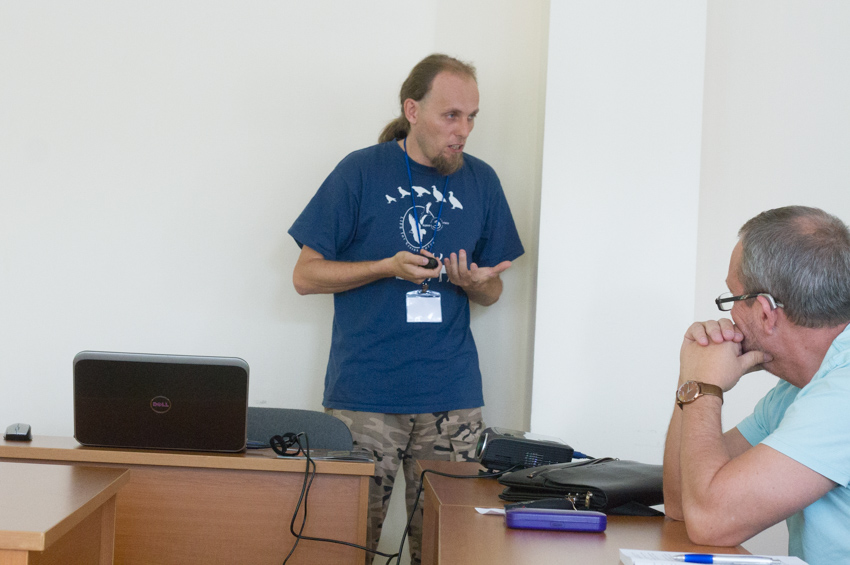
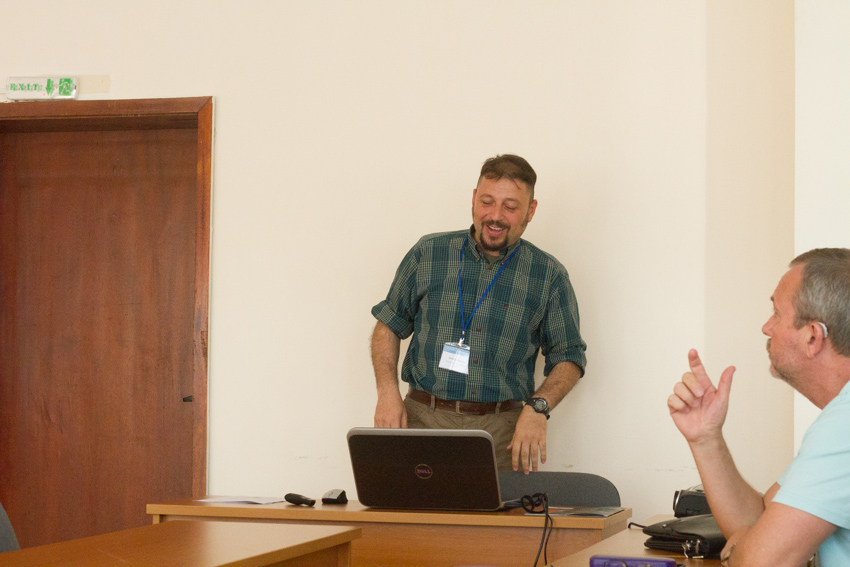
Fund for Wild Flora and Fauna and partners have submitted five joint papers and made oral presentations in the SECTION: ECOLOGY & ENVIRONMENTAL PROTECTION O-E-9, available in the Book of Abstracts. The full-length papers will be published in special issues of specialized indexed journals. Shortly, here are the titles of submitted papers:
- Habitat viability and threats assessment for the reintroduction of the Bearded Vulture (Gypaetus barbatus) in Bulgaria
Dimitar Parvanov1, Emilian Stoynov2, Hristo Peshev2, Atanas Grozdanov1
1Faculty of Biology, Sofia University “St. Kliment Ohridski”, Bulgaria
2Fund for Wild Flora and Fauna, Bulgaria
Abstract: The availability of areas for reintroducing the Bearded Vulture in Bulgaria was assessed.
- Population boost of the Griffon Vulture Gyps fulvus in Bulgaria based on reintroductions
Emilian Stoynov¹, Elena Kmetova-Biro2, George Stoyanov3, Hristo Peshev¹, Ivelin Ivanov², Ilian Stoev², Luchezar Bonchev¹, Nadya Vangelova¹, Zlatka Nikolova², Lyubomir Iankov², Dimitar Parvanov4,Atanas Grozdanov4
¹Fund for Wild Flora and Fauna, Blagoevgrad, Bulgaria
²Green Balkans – Stara Zagora, Bulgaria
³Birds of Prey Protection Society – Sofia, Bulgaria
4Faculty of Biology, Sofia University St. Kliment Ohridski, Sofia, Bulgaria
Abstract: In 2016, the first successful fledging of 11 chicks and total number of 22-28 breeding pairs marked the successful reintroduction of the species in three new sites – Vrachanski Balkan (8-10 pairs and 4 fledglings), Eastern Balkan Mountain (8-10 pairs and 5 fledglings) and Kresna Gorge (6-8 pairs and 2 fledglings). This led to further increase of the national population of the species with some 20%. Together with the on-going increase of the autochthonous Griffon Vulture population in the Eastern Rhodopes (75-80 pairs) the total national population is now over 100 pairs and the range has doubled from 5 000 km2 to more than 10 000 km2.
- Spatial dynamics of Gyps fulvus population in Southwest Bulgaria
Hristo Peshev¹, Emilian Stoynov¹, Dimitar Parvanov² and Atanas Grozdanov²
¹Fund for Wild Flora and Fauna, 2700 Blagoevgrad, P.O. Box 78, Bulgaria
²Faculty of Biology, Sofia University “St. Kliment Ohridski”, Sofia, Bulgaria
Abstract: Movements and sojourn of Griffon Vulture in Bulgaria are poorly known. In the light of multiple reintroductions of the species in Bulgaria and by means of intensified classic and introduction of modern technologies a lot of new data was collected. Here we analyze data from more than 450 resightings of marked birds as well as 9 birds tracked by GPS/GPRS transmitters.
- Behavioral specifics may help conservation of Griffon Vulture Gyps fulvus in modern Europe through establishment of vulture safe areas – a model from Bulgaria
Atanas Grozdanov1, Emilian Stoynov2, Hristo Peshev2, George Stoyanov3, Luchezar Bonchev2, Nadya Vangelova2, Dimitar Parvanov1
1Faculty of Biology, Sofia University St. Kliment Ohridski, Sofia, Bulgaria
2Fund for Wild Flora and Fauna, Blagoevgrad, Bulgaria
³Birds of Prey Protection Society – Sofia, Bulgaria
Abstract: We found that certain behavioral specifics, such as gregariousness, conservativeness towards feeding and roosting sites, food type, quality preferences, and bias in seasonal mobility of the Griffon Vulture could be used for its adequate management and achievement of positive population trend in the socio-economical circumstances of modern Europe. Positive examples were provided and a model for establishment of a network of Vulture Safe Areas, based on concentration of protection efforts and birds was proposed as an urgent conservation tool.
- Wolf and Vultures sympatric presence in Europe – ecological benefits and constrains
Emilian Stoynov¹*, Nadya Vangelova¹, Diana Zlatanova², Hristo Peshev¹, Dimitar Parvanov², Ventseslav Delov², Atanas Grozdanov²
¹Fund for Wild Flora and Fauna, Blagoevgrad, BULGARIA,
²University of Sofia “St. Kliment Ohridski” Faculty of Biology, BULGARIA,
Abstract: Relationship between wolf and vultures is rarely studied in Europe. Some authors report positive interaction between wolf as a predator and vultures as scavengers benefiting to feed on predator’s prey leftovers. Some most recent studies, however, highlight the danger of Man-Wolf conflict and the related use of poison baits, as a great threat for vultures. Conservation of vultures in areas, where wolf appears is complicated and up to now hardly proven working. The Man-Wolf conflict and poison use is hardly controlled even in developed countries. Thus, urgent indirect buffering measures were proposed. Among these is the establishment of a network of Vulture Safe Areas and feeding sites management.