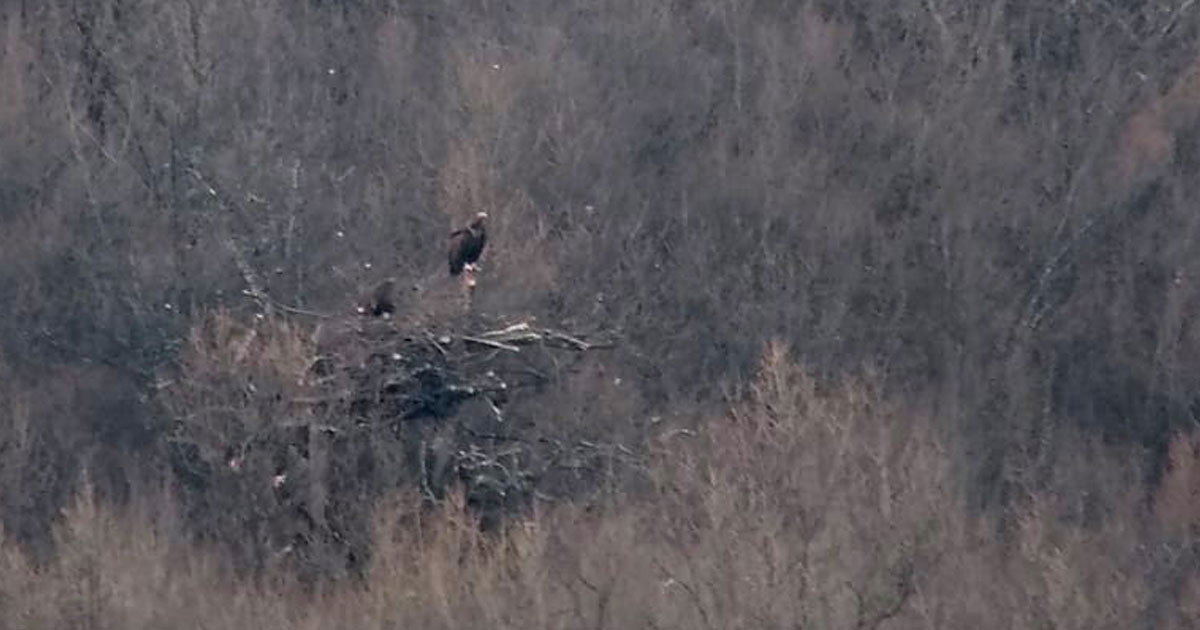
Three pairs started nesting activity at the beginning of 2021 – two are in the Eastern Balkan Mountains and one in the Vrachanski Balkan. Copulation was also observed in one of the pairs.
This is a milestone in the process of returning the species, as these pairs are present and even if they fail to raise offspring until the end of this year (due to youth and inexperience), at least we know that they have accepted the respective areas in the Balkan Mountains as their home and it is very likely that the next stages of restoration of the species in the country are short to come.
The two pairs in the area of Kotel have occupied nests (artificial platforms, deliberately made by the project team) and are actively upgrading them, and the one in Vrachanski Balkan is building its own nest. These are the first nests of the species established in more than a half of century and the only ones ever photographed in the Balkan Mountains.
The restoration of an extinct species in a given area does not come with the establishment of a single event, but in a series of such. In the feasibility studies that took place prior to reintroduction start, the following milestones and parameters were set:
- Detain more than one individual, preferably a minimum of 8 individuals in the area of release.
- The species should be present in the area of release throughout the year.
- To form pairs who keep together;
- Formed pairs should demonstrate strong bond and breeding behavior (occupation of territory, nest building, courtship display flights and mating).
- To lay an egg.
- To raise an offspring.
- At least 5-6 young to be raised annually in the territory of the release and this number to be higher than eventual loss of individuals for various reasons.
By the end of 2020, after the release of a total of 18 birds since 2018 in the Eastern Balkan Mountain, the goals of items 1, 2 and 3 were achieved, and just now we report the achievement of goal 4.
In 2020, the release of 10 Cinereous Vultures in the Vrachanski Balkan led to the achievement of item 1, 2 and 3 for the Nature Park “Vrachanski Balkan”, and again now we observe the goal in item 4 also achieved.
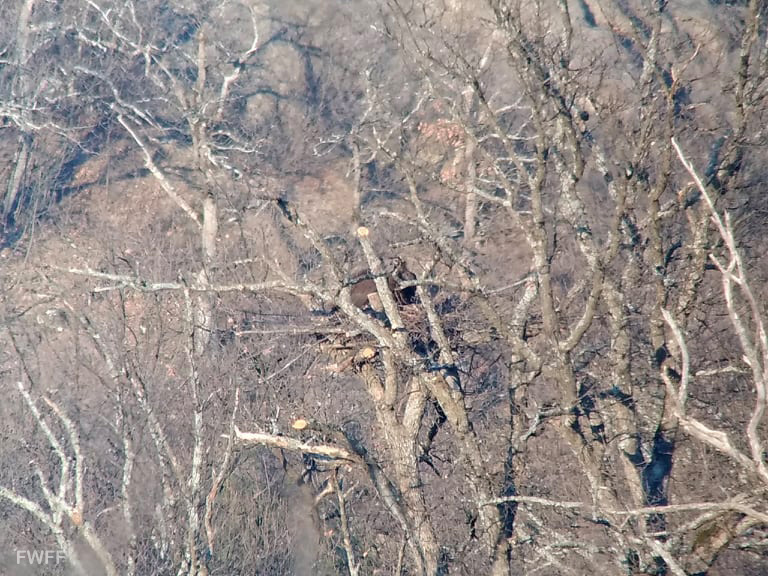
Another important point is that birds approve and occupy nests on deciduous (non-evergreen) tree species, such as Sessile oak. In Spain, there are also nests of oaks, but evergreen species such as Holm and Cork oak. In Dadia (Greece) they nest exclusively on pines, and in Turkey and Georgia on pines and junipers. This feature led to the expectations of the project team that birds raised and imprinted on Mediterranean forest nesting substrate were unlikely to accept nesting on a deciduous (non-evergreen) one from the temperate zone, and that they would probably seek to build their nests on pines. Although artificial platforms were also built on pines, so far the pairs have occupied nests of oaks. This gives a good prospect that Bulgaria and other countries with a predominant temperate climate and vegetation will be able to provide conditions for the Cinereous Vulture and it will recover in parts of its historic range, where it disappeared due to human intervention.
Today, although there is a lack of giant oaks and elms on plains and semi-mountainous areas, apparently there are still places that with purposeful management can be occupied again by the Cinereous Vulture and the species to return permanently to the Bulgarian breeding avifauna, which after the latest news is becoming more and more likely.
Common and ubiquitous throughout the country until the early twentieth century, the Cinereous Vulture is thought to have disappeared from Bulgaria. For the first time this fact is officially described in the Red Data Book of the People’s Republic of Bulgaria from 1985, when the species was placed in the category “extinct”. The actual extinction probably occurred in the period 1950-1960, when nesting data were no longer available and observations of the species became extremely rare.
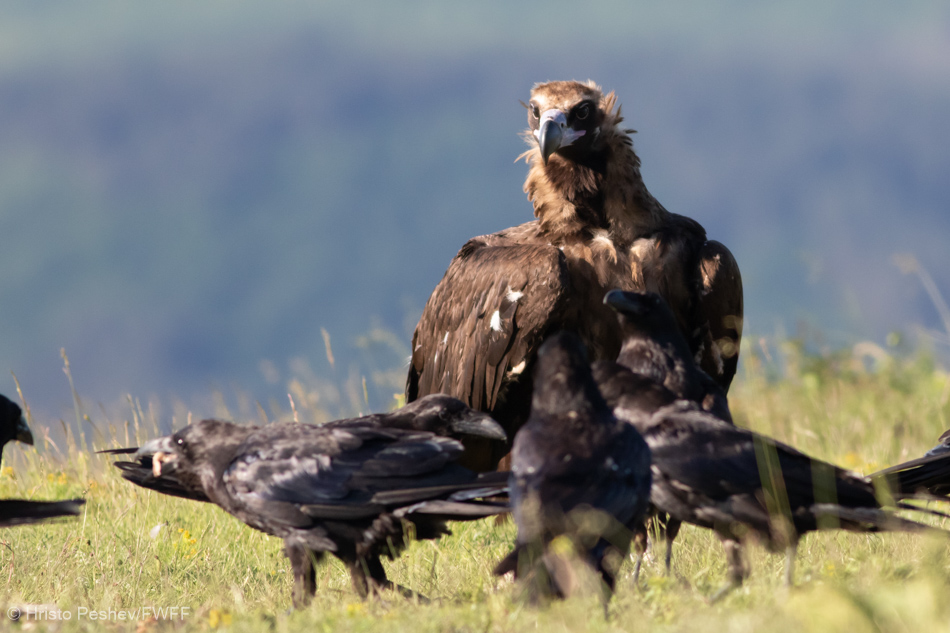
In the 1980s, sightings of single birds and small groups of the species became more frequent in the Eastern Rhodopes, where individuals from the last known colony of the species in Balkans – in the Dadya forest in Greece flyover the border area. Probably such individuals formed a pair and nest in the area of Studen Kladenets Dam, where in 1993 the first for decades and the last since then nest of the species in Bulgaria was discovered. After one successful nesting, the pair disappeared and so the return of the species is fleeting, which gives the reason for the Cinereous Vulture to remain in the category of “extinct” in the next edition of the Red Data Book of Bulgaria in 2011.
In 2015, a partnership project “Bright Future for the Black Vulture” LIFE14NAT/BG/649 was launched, where Green Balkans (www.greenbalkans.org), Fund for Wild Flora & Fauna (www.fwff.org), Birds of Prey Protection Society (www.bpps.org), the Vulture Conservation Foundation (www.4vultures.org), the Euronatur (www.euronatur.org) and the Extremadura Regional Government (www.juntaex.es) cooperate. The project is funded by the EU LIFE program and aims to restore the breeding population of the species in Bulgaria through reintroduction (release of birds raised in captivity or by supplying birds from other areas). Thus, in 2018 began the import of individuals from Extremadura (Spain) and various European zoos and their release in the Eastern Balkan Mountains (near Kotel and in the Nature Park “Sinite Kamani”) and Nature Park “Vrachanski Balkan”.