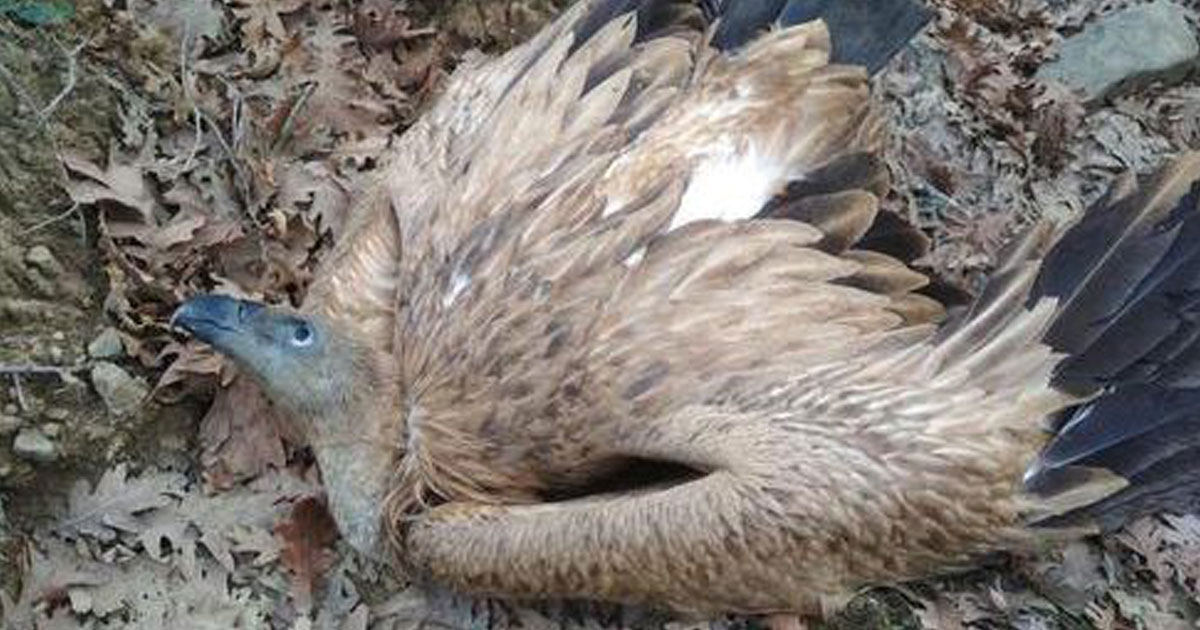
A mass poisoning incident marked the beginning of February 2020 in the Messolonghi region in Greece. Nine Griffon vultures have been found dead and two more poisoned vultures have been rescued in ANIMA rehabilitation center, while it is possible that more are yet to be discovered. The cinereous vulture, Riga, released in 2018 as part of the Bright Future for the Black Vulture project in Bulgaria is currently wintering in the region. At the moment of the incident, Riga moved to the area around Embesos, about 60km from Messolonghi, where the bird’s most northern roosting site is and returned to Messolonghi on the 13th February while the case was yet to be solved. According to local shepherds, she has jointed a flock of 30 Griffon Vultures that have been seen in that area, which sustained half of the vultures’ population of west Greece alive, while the poisoning incident was still active in Messolonghi.
Local authorities from the Messolonghi-Akarnanika region, including the Management Body of the protected areas, the Forestry Service of Messologhi and that of Ioannina, initiated urgent measures on Friday, going through the weekend. Our team was in constant contact with local authorities, tracking Riga’s movements, to secure the bird’s safety and help the local team find the poisonous bate. Nevertheless, neither Riga, nor the other Griffon vulture, released in Bulgaria and fitted with a GPS transmitter, nesting in the Akarnanika region (around 50km from Messolonghi), managed to help locate the poisonous bate. This case once again shows the key role birds with GPS transmitters play for the timely response in similar cases and coordinated actions needed to safeguard the remaining alive birds.
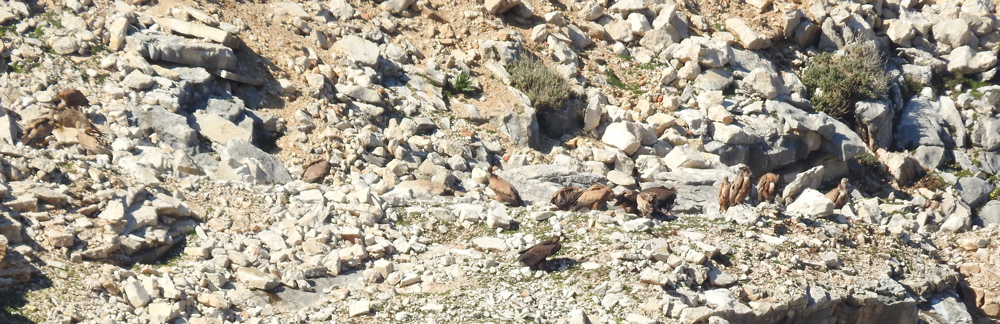
The local team in Greece conducted a pilot supplementary feeding at the newly built feeding station under the umbrella of the Balkan Anti-Poisoning Project, supported by MAVA Foundation through the implementation of the Balkan Anti-Poisoning Project Small Grants Programme, managing to attract the remaining vultures, while continuing the search for the poisonous bait and more poisoned birds. The Hellenic Ornithological Society (HOS) anti-poison dog unit joined the search locating dead, probably poisoned, carcasses and took samples for further toxicological investigation.
Apart from these measures the local team organised a coordinated monitoring of the three remaining small colonies in Messolonghi, Akarnanika and Empesos (the last in continental Greece excluding north-east Greece, e.g. the region of Thrace) with the help of HOS and the Hunting Associations of Sterea Hellas and Epirus, where the number of birds and breeding pairs gives us hope that the populations will recover. The collected data indicates that if the viable population of Griffon Vultures in this part of the Balkans is managed well enough and active anti poiosoning measures are undertaken chances are that it will grow into a big and prosperous colony.
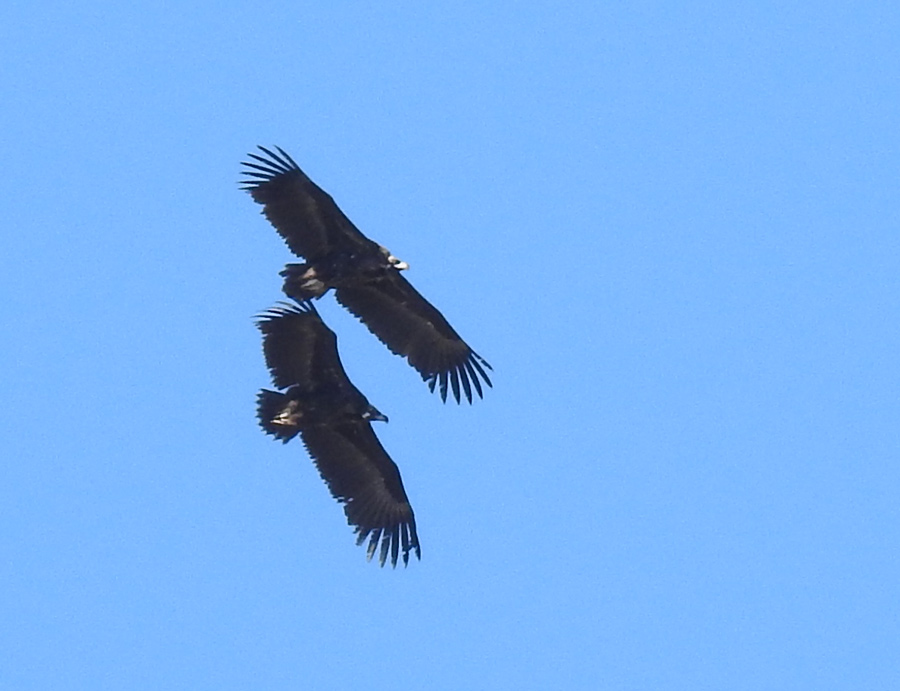
What is also interesting for our team is that Riga has found a potential partner and obviously likes the region, despite the risk of poisoning in the area. The region deserves our attention and we hope to be able to release birds fitted with GPS transmitters in order to prevent similar mass poisoning cases, but also to help local authorities and prosecutors have a real chance of reaching a verdict.
We’d like to thank Dr. Rigas Tsiakiris, from the Forestry Service of Ioannina, Dept. of Administration and Forest Managment, as well as the Management Body of Messolonghi Lagoon – Akarnanika Mountains for providing information relevant to the case. Also a big thank you to Dionysis Mamasis and Nikos Noulas for sharing their interesting photos of Riga.