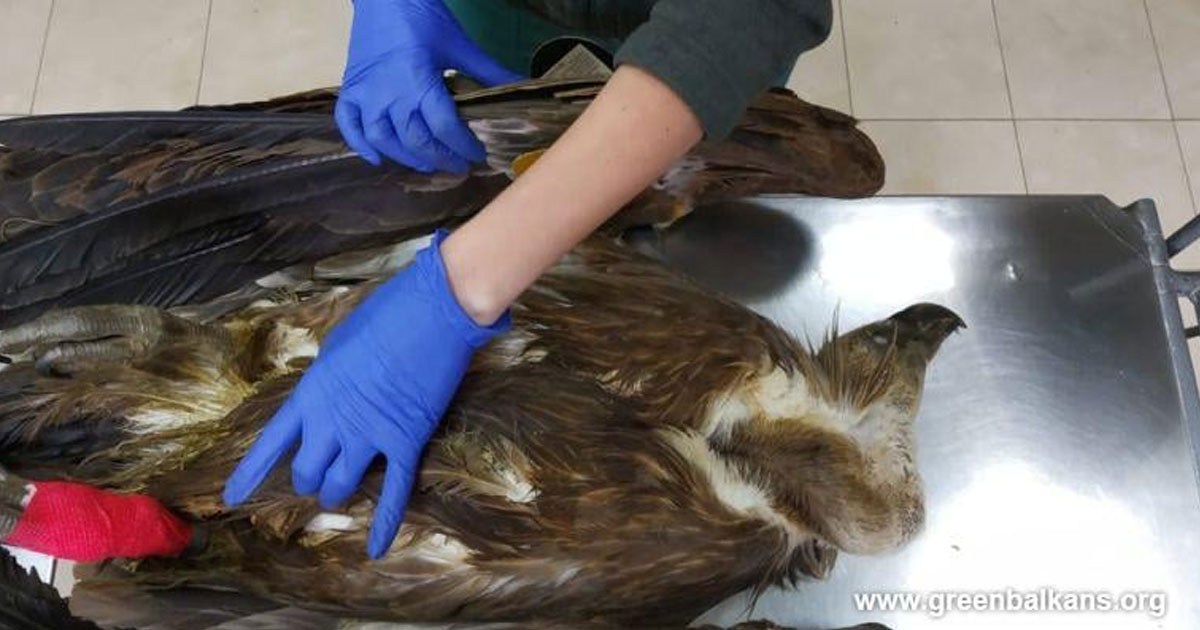
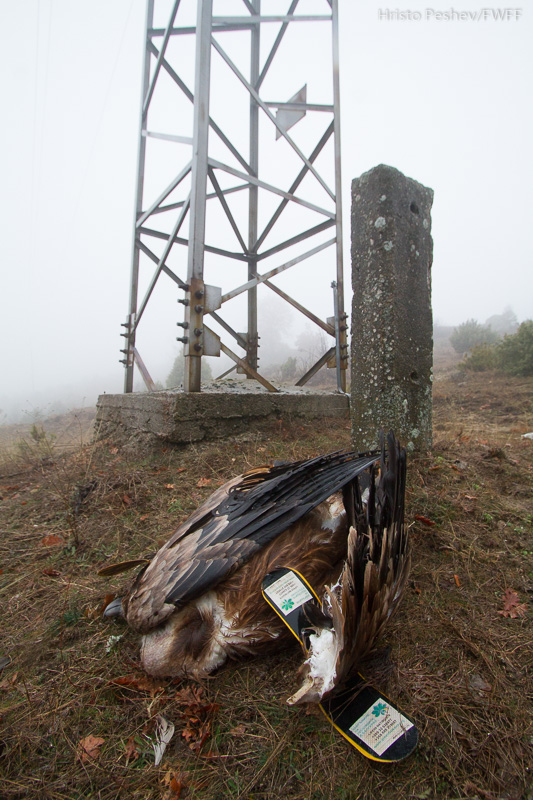
A Griffon vulture, released in 2017 in Kotel mountain, was found almost dead under a power line in 2020. Unfortunately, the bird died in the Wildlife Rescue Center in Stara Zagora. After the autopsy and toxicological analyses have been conducted, the veterinarians confirmed lead poisoning.
Actually, this is the second proven case in Bulgaria for lead poisoning of vultures, when in 2019 a female Griffon vulture was found dead in the Eastern Rodopi by BSPB team and the analyses proved it. Moreover, the x-Rayed bird’s corpse showed old bullets in the wing. It is interesting that the bird was infertile in the last three years, which seemed to be a consequence from the lead contamination.

What is lead poisoning?
Lead poisoning from ammunition used by game hunters is an often-overlooked threat to scavengers, and mainly vultures. When an animal is shot, a lead bullet fragments widely throughout the carcass. Often the carcass and viscera of these animals are left behind and out in the open by hunters. Whilst feeding on the carcasses of animals that have been shot vultures can then ingest lead fragments.
Or, if a vulture shot and injured, a lead bullet can stay in the body for long and cause abnormal behavior.
The health impacts of lead contamination in vultures include the inhibition of metabolic functions and negative effects on the nervous, reproductive, immune, urinary and digestive systems. Acute and chronic poisoning can result in weakness, inhibited movement, paralysis, inhibited respiration, behavioral abnormalities, weight loss, immune system disruptions and bone mineralization. Ultimately, in many cases lead toxicological results in death.
How lead contamination impact human health?
Traditionally, in Bulgaria many people from the rural area consume hunted meat, so the risk of lead contamination is very high in the hunting communities.
There is no safe level of lead in the blood. Studies suggest neurotoxic effects of lead may be the most widely-known, but also kidney disease and impacts to the cardiovascular system, hormonal changes during pregnancy, lead that has been stored in the skeleton is released into the blood, exposing both mother and fetus, low birth weight and spontaneous abortion.
How to minimize the threat?
Ban on the use of lead shots in wetlands finally came into force on 25 January. The Member States have to implement the ban until 15 February 2023. The European Chemicals Agency (ECHA) has published its proposal for further restrictions on the use of lead in ammunition for hunting, outdoor sports shooting and fishing. Its report and annex conclude that restrictions would be justified based on risks to environment and human health.
VCF, 22 November 2018, New research review reveals the extent of lead contamination in wild vultures, www.4vultures.org
Environmental Health News, 25 February 2020, Lead in hunted meat: Who’s telling hunters and their families? www.ehn.org
Rewilding-Rhodopes, 4 July 2019, Първи доказан случай на загинал от оловно натравяне белоглав лешояд у нас, www.rewilding-rhodopes.com The Bright Future for Black vultures, Втори доказан случай на оловно отравяне на белоглав лешояд в България!, https://greenbalkans.org/VulturesBack/