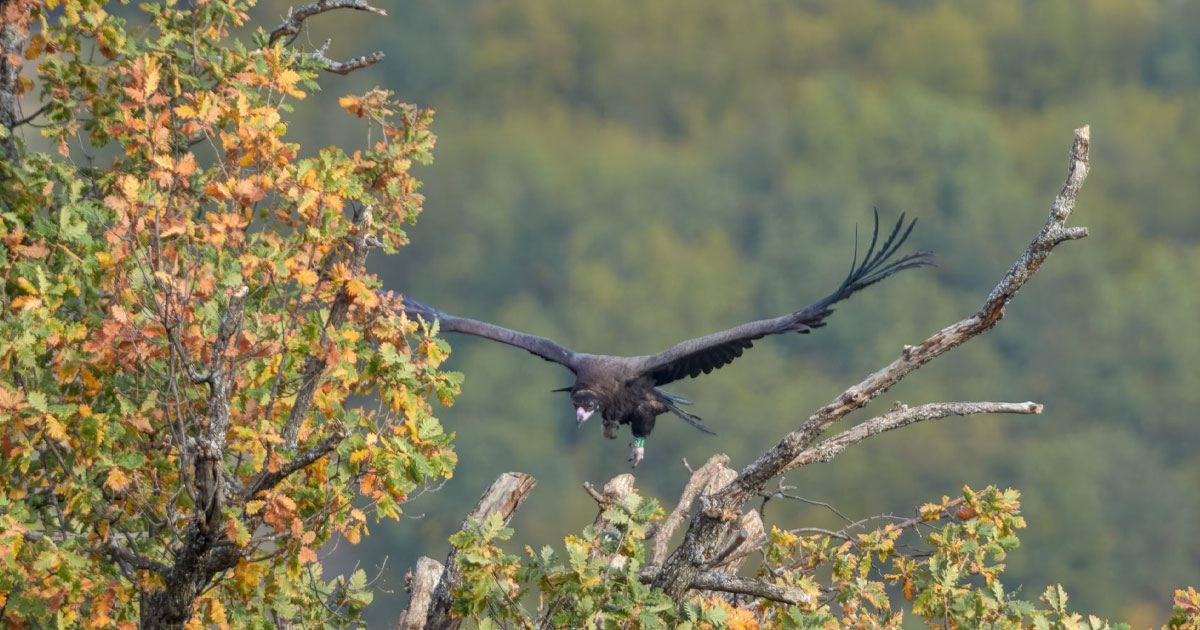
Twenty-eight years after the last nesting and 36 years after the species was officially declared extinct in the country (Red Data Book of Bulgaria, Volume 2), the Cinereous Vulture is again successfully nesting in Bulgaria.
When it was tagged with rings and a satellite transmitter in the nest on July 25 2021, the young vulture was named Michev-Boev after the two Bulgarian ornithologists and conservationists Tanyu Michev and Nikolay Boev. Back in 1980, their studies have shown that the species is no longer breeding in the country, therefore they proposed its restoration by importing birds from abroad and release into the wild in Bulgaria. Although they did not live to see the realization of the idea, Michev and Boev inspired a generation of environmentalists, who worked purposefully to achieve this success. Although three pairs have laid eggs in Balkan Mountain in Bulgaria in 2021, only one successfully raised a chick, which could be attributed to the inexperience of the young parents.
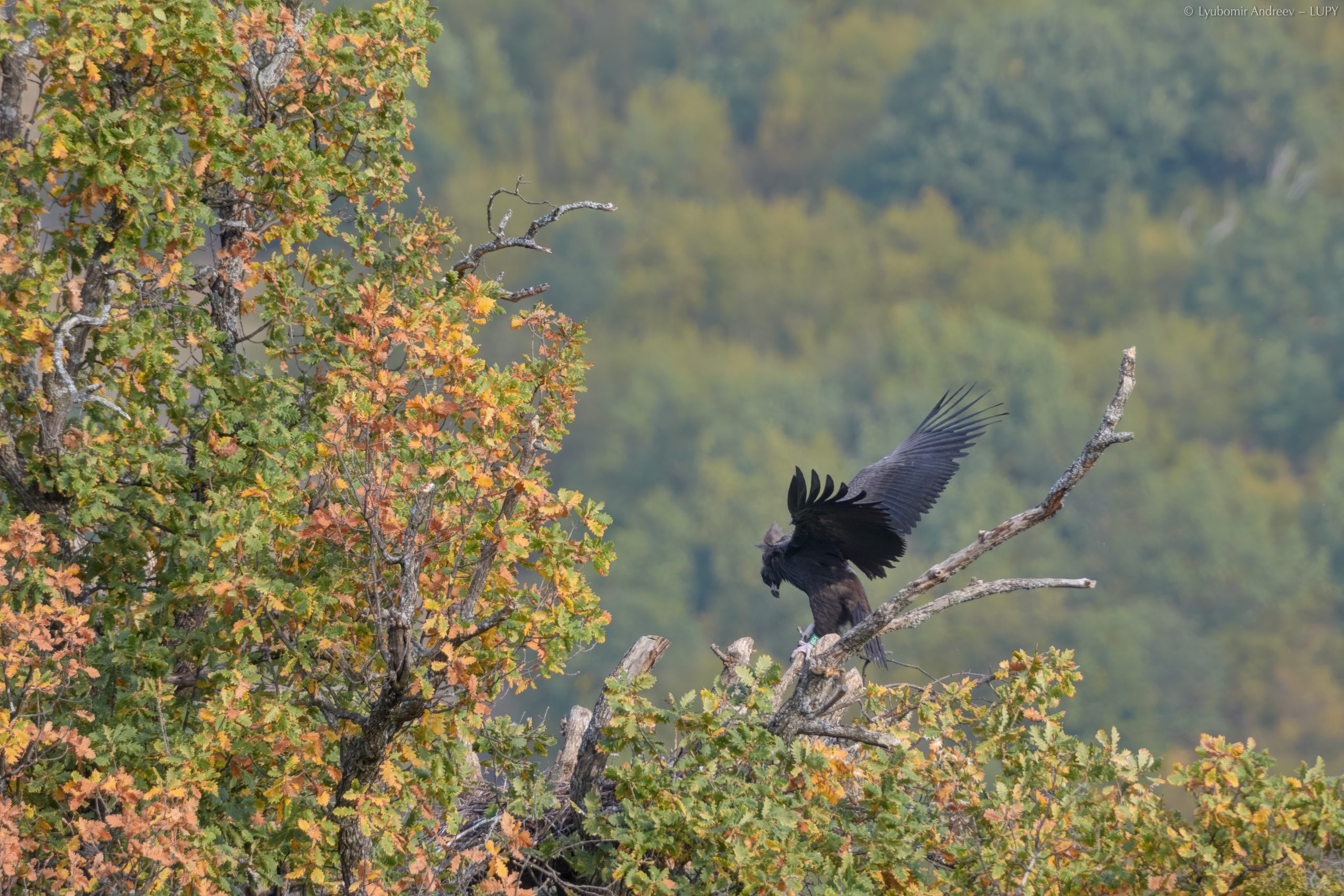
When it was tagged with rings and a satellite transmitter in the nest on July 25 2021, the young vulture was named Michev-Boev after the two Bulgarian ornithologists and conservationists Tanyu Michev and Nikolay Boev. Back in 1980, their studies have shown that the species is no longer breeding in the country, therefore they proposed its restoration by importing birds from abroad and release into the wild in Bulgaria. Although they did not live to see the realization of the idea, Michev and Boev inspired a generation of environmentalists, who worked purposefully to achieve this success.
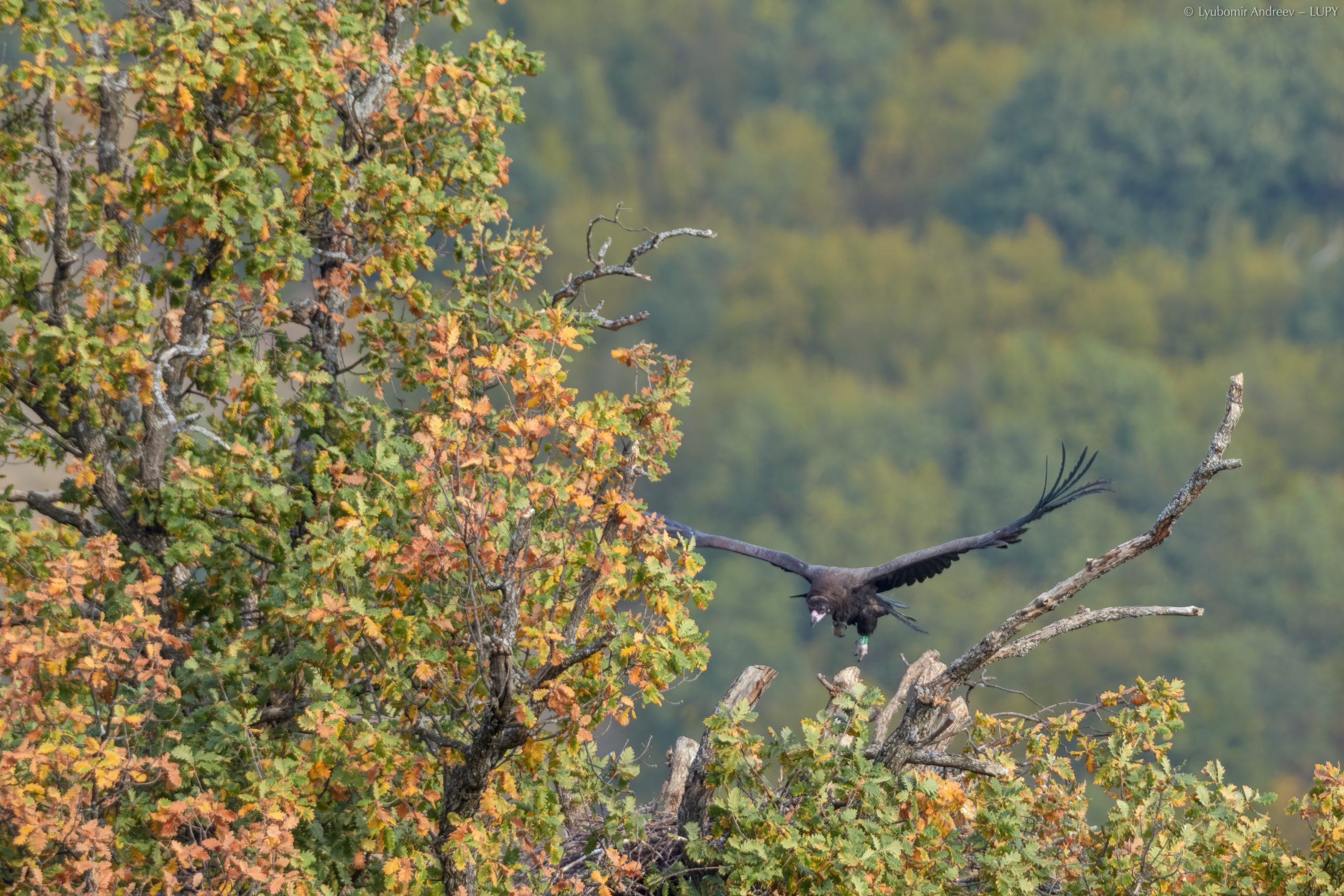
Today, the Cinereous Vulture breeds in only two countries in the Balkans – Greece and now Bulgaria, and only in five in the European Union – plus Spain, Portugal and France.
The historic success was made possible by the joint complex and long-term efforts of several local and international organizations – the Green Balkans, the Fund for wild flora and Fauna, the Birds of Prey Protection Society (Bulgaria), the Vulture Conservation Foundation (Netherlands), Euronatur (Germany), the Government of Extremadura (Spain) and through financial support under the EU LIFE program within the project “Bright Future for the Black Vulture” LIFE14NAT/BG/649.
The activities of FWFF in the project are also supported by Biopark Zoo de Doue (France), Zoo Sainte Croix (France), Zoo Görlitz (Germany), Penosft Publishing (Bulgaria) and a number of individual sponsors and volunteers.